How to Drill Aluminum: Bits, Speeds and Lubricant
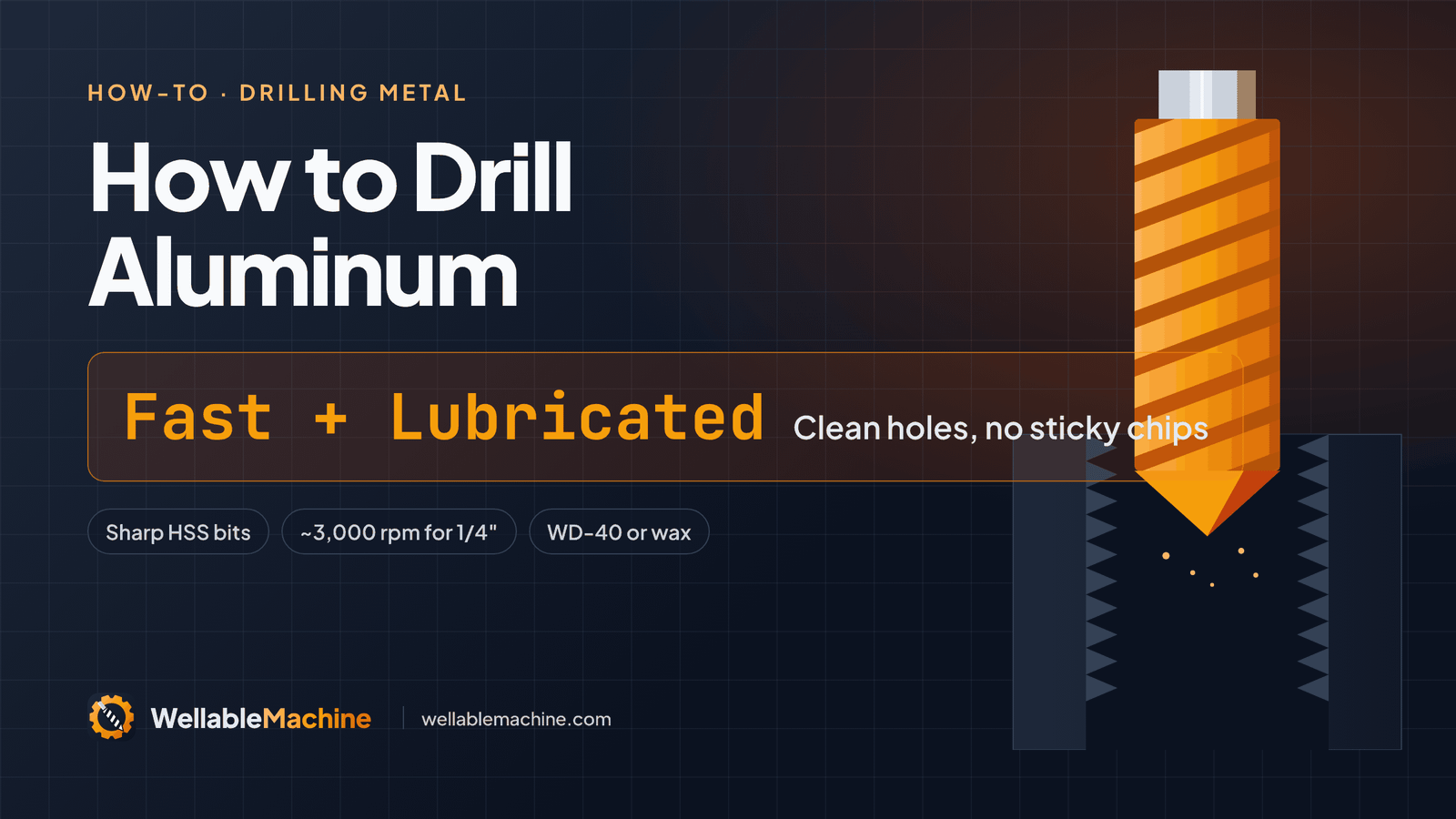
Quick answer: to drill aluminum, use a sharp HSS or titanium-coated twist bit, run it fast (about 3,000 RPM for a 1/4 in bit), add a little lubricant such as WD-40, kerosene or cutting wax to stop chips sticking, and use firm, steady feed. Clear chips often in deep holes, clamp the work, back thin sheet with scrap wood and deburr the hole afterwards.
Aluminum is one of the easiest metals to drill, but it has its own quirks. It is soft and gummy, so chips can weld themselves to the drill and clog the flutes, the bit can grab as it breaks through thin sheet, and the soft surface is easy to scratch or dent. With the right speed, a little lubricant and good clamping, though, you’ll get clean holes quickly. This guide covers bits, speeds, lubricants and the tricks for sheet, extrusions and thick plate.
What You Need
- Sharp HSS, titanium-coated or carbide bits (no need for cobalt)
- Center punch or spot drill
- Lubricant: WD-40, kerosene, cutting wax or aluminum cutting fluid
- Clamps and scrap wood
- Deburring tool or countersink
- Safety glasses
A sharp standard bit is the most important item. A dull bit that cuts steel acceptably will smear aluminum instead of cutting it. Our guide to cobalt vs titanium drill bits explains why cobalt isn’t needed here.
Drill Speeds for Aluminum
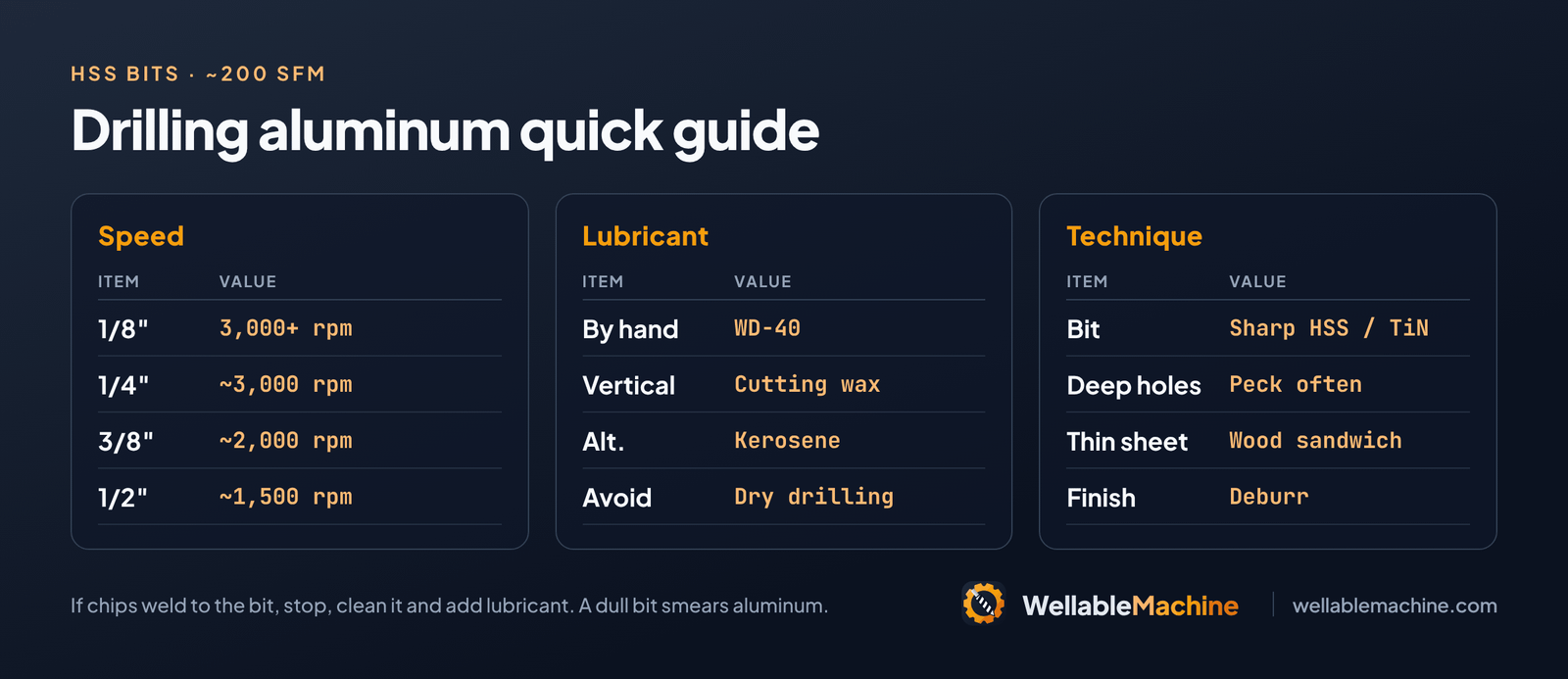
| Bit size | Speed (HSS) |
|---|---|
| 1/8 in (3 mm) | 3,000+ RPM (top speed) |
| 1/4 in (6 mm) | about 3,000 RPM |
| 3/8 in (10 mm) | about 2,000 RPM |
| 1/2 in (13 mm) | about 1,500 RPM |
| 3/4 in (19 mm) | about 1,000 RPM |
These come from a cutting speed of about 200 SFM. Many hand drills top out below these numbers for small bits, so just run at full speed. Our drill speed chart compares aluminum with steel and stainless.
How to Drill Aluminum Step by Step
- Mark and center punch the hole. Aluminum is soft, so a light tap is enough.
- Clamp the part with scrap wood underneath. Protect finished surfaces with tape or soft jaws.
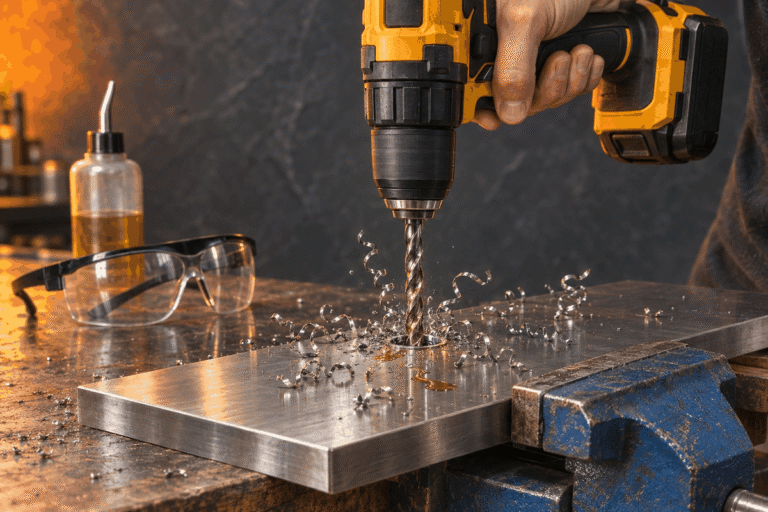
- Lubricate the spot with a drop of WD-40, kerosene or a dab of cutting wax on the bit.
- Drill at high speed with firm, steady feed. You want a continuous curled chip.
- Peck in deep holes: every bit diameter or two of depth, pull out to clear chips and add a little more lubricant.
- Ease off at breakthrough, especially in thin sheet, so the bit doesn’t grab.
- Deburr both sides with a countersink or deburring tool.
Why Lubricant Matters
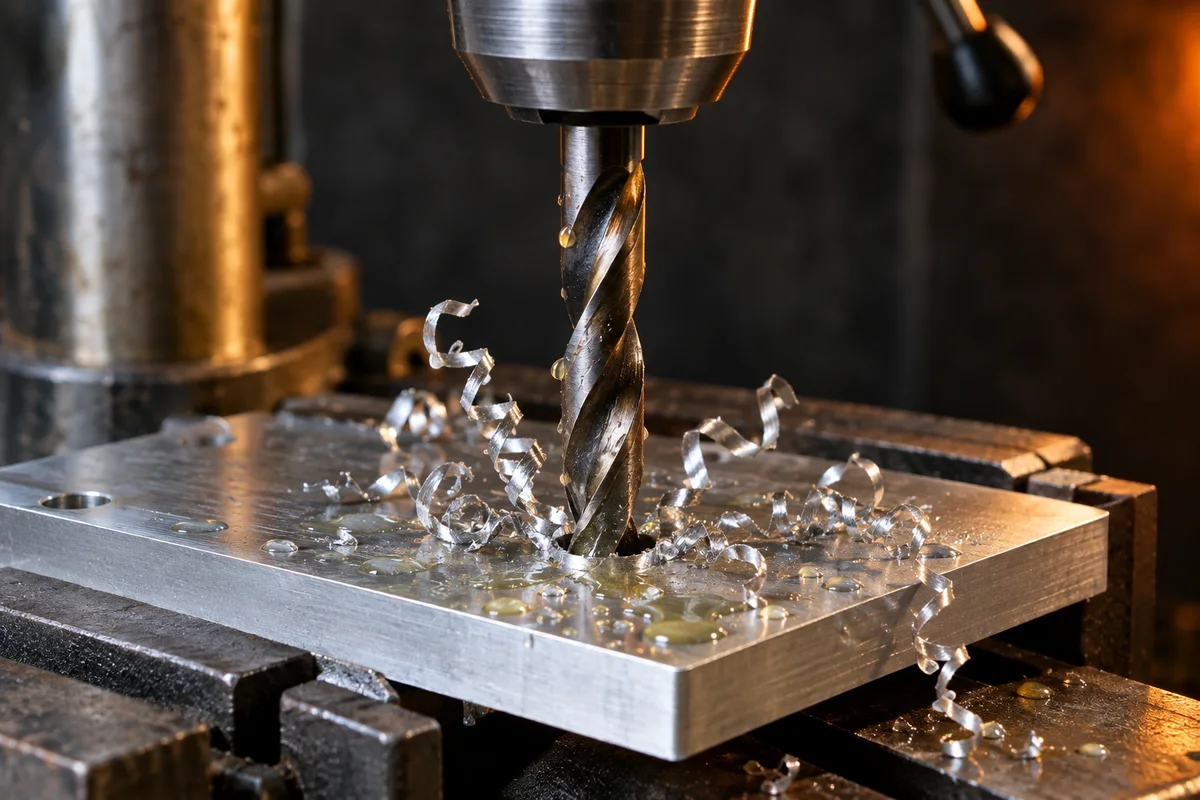
Without lubricant, small bits of aluminum weld onto the cutting edge (called built-up edge). The bit then cuts oversize, the finish turns rough, and the flutes clog until the bit binds. A light lubricant stops this. WD-40 and kerosene are popular for drilling by hand; cutting wax sticks to the bit and suits overhead or vertical work; water-soluble coolant is best in production. Don’t use heavy sulfurized cutting oil meant for steel; it’s unnecessary and stains some alloys.
Drilling Thin Aluminum Sheet
- Clamp the sheet between two pieces of scrap wood and drill through the sandwich. This prevents grabbing and burrs.
- Use a step drill for holes over about 1/4 in; it gives round holes without grabbing. See how to use a step drill bit.
- A 135° split-point bit walks less and breaks through more gently than a 118° point.
- For rivets, use the exact drill size the rivet maker gives; a loose hole weakens the joint.
Drilling Thick Aluminum and Extrusions
- Pilot first for holes over 3/8 in.
- Peck often and keep lubricant flowing; long, stringy chips can wrap around the bit.
- Square tube and extrusions: support the far wall with a wooden block inside so the bit doesn’t push it in, and drill each wall separately if you need precise alignment.
- Cast aluminum chips into short pieces and drills easily; check for hidden porosity that can make the bit wander.
Alloys Behave Differently
| Alloy | Drilling behavior |
|---|---|
| 1100, 3003 (soft, pure) | Very gummy; sharp bit and plenty of lubricant |
| 5052 (sheet, marine) | Fairly gummy; lubricant helps a lot |
| 6061-T6 (most common) | Drills cleanly with lubricant; the everyday alloy |
| 7075 (aerospace) | Harder; cuts with nice chips and a good finish |
| Cast alloys | Short chips, easy drilling; watch for porosity |
Tapping Aluminum After Drilling
Aluminum threads strip more easily than steel ones, so give them at least twice the screw diameter of engagement, or use a thread insert for bolts that will be removed often. Use the standard tap drill (aluminum handles a full 75% thread) and a light lubricant. Our tap drill size chart lists every size.
Common Problems
| Problem | Cause | Fix |
|---|---|---|
| Chips stick to the bit | No lubricant or dull bit | Add WD-40 or wax; sharpen or replace |
| Hole oversize | Built-up edge on the bit | Clean the bit; lubricate |
| Bit grabs at breakthrough | Too much feed in thin sheet | Ease off; back with wood; use a step bit |
| Triangular hole in sheet | Twist drill chattering | Use a step bit or sandwich the sheet |
| Long stringy chips | Continuous feed without pecking | Peck to break chips |
Drilling Anodized and Painted Aluminum
Anodized aluminum has a very hard oxide layer on the surface. It can make the bit skate, so use a spot drill or a 135° split-point bit and a crisp center punch mark. The coating can also chip around the hole, so drill from the side that will be seen, use painter’s tape over the spot and finish with a light countersink to leave a neat edge. On powder-coated or painted aluminum, tape helps prevent the coating from flaking.
Bit Geometry for Aluminum
Ordinary jobber bits work fine, but if you drill a lot of aluminum, a few details help:
- Polished flutes shed chips better and resist built-up edge.
- High-helix (fast spiral) bits clear long aluminum chips more quickly.
- Uncoated or TiB2/ZrN-coated bits are preferred in production; TiAlN coatings can react with aluminum at high temperature.
- Carbide bits cut aluminum beautifully at very high speeds in a rigid machine.
Safety Notes
- Aluminum chips are sharp and stringy; clear them with a brush, never your hand.
- Small parts can spin if the bit grabs, so always clamp.
- Wear eye protection; long chips can flick out at speed.
- Fine aluminum dust from sanding or grinding is a fire risk; keep it away from sparks and clean up regularly.
Frequently Asked Questions
6 quick answers from our editors
01What drill bit is best for aluminum?
A sharp HSS or titanium-coated twist bit. Cobalt isn’t needed.
02Should I use oil when drilling aluminum?
A light lubricant such as WD-40, kerosene or cutting wax helps a lot. It stops chips welding to the bit.
03What speed should I drill aluminum?
Fast: about 3,000 RPM for 1/4 in and 1,500 RPM for 1/2 in.
04Why does aluminum stick to my drill bit?
Heat and pressure weld the soft metal to the edge. Use lubricant and a sharp bit.
05How do I drill a clean hole in thin aluminum?
Sandwich the sheet between scrap wood, or use a step bit.
06Can I drill aluminum with a wood bit?
Brad-point bits will cut thin aluminum in a pinch, but a twist bit is far better.
Bottom Line
Drill aluminum with a sharp HSS or titanium bit, at high speed, with a light lubricant and firm, steady feed. Peck to clear chips in deep holes, clamp and back thin sheet with wood (or use a step bit), and deburr every hole. Get those right and aluminum is the easiest metal in the shop.