5/16-24 Tap Drill Size: I Drill Chart, Substitutes & Clearance
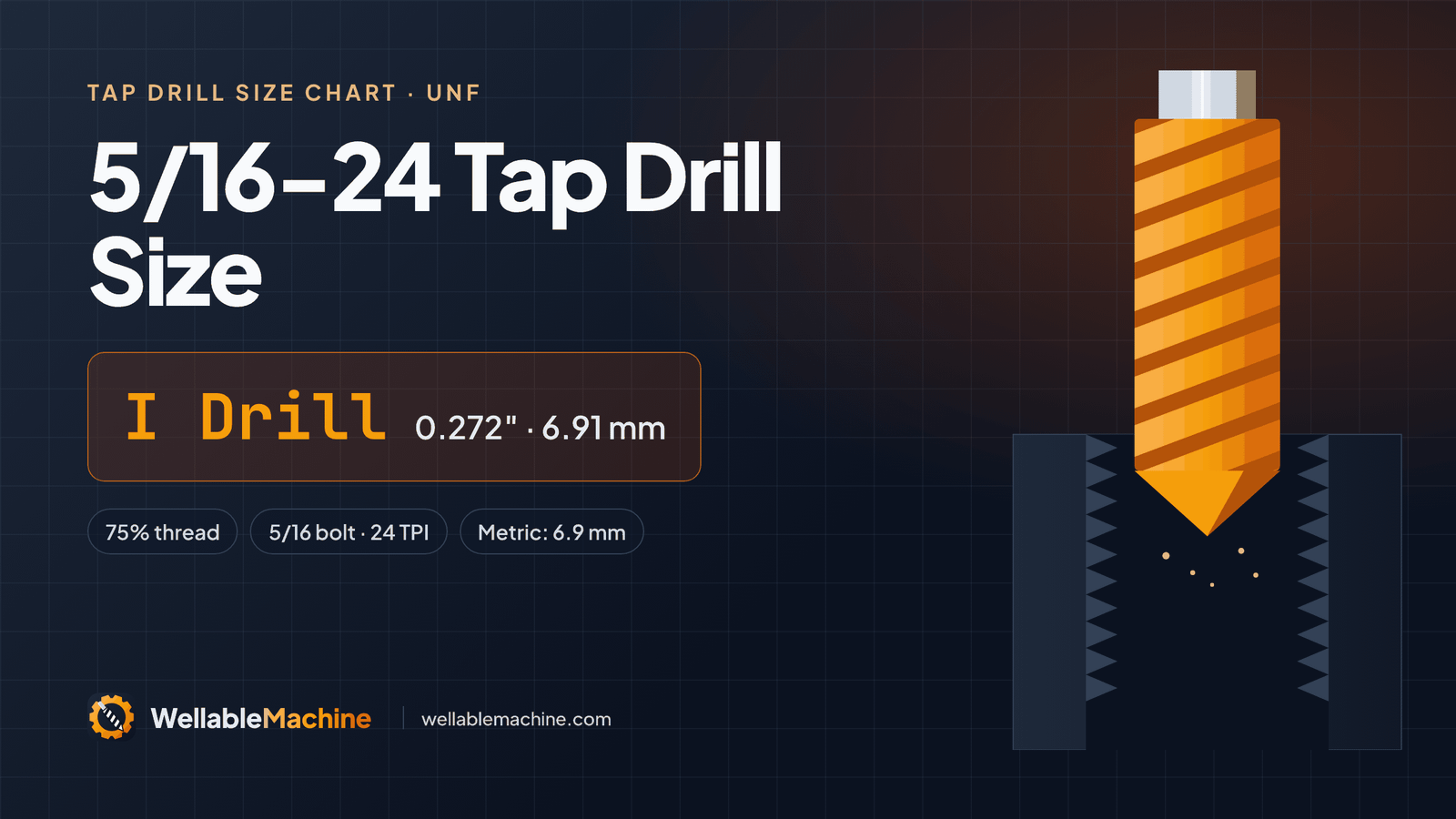
Quick answer: the standard tap drill for a 5/16-24 UNF thread is an I drill (0.272 in / 6.91 mm), giving a 75% thread. The metric equivalent is 6.9 mm. If you don’t have letter drills, 7.0 mm or 9/32 in (0.281 in) are good alternatives, and both make tapping steel and stainless noticeably easier.
5/16-24 is a fine thread that turns up most often on cars, trailers and motorcycles. Because the standard drill is a letter size that many home sets lack, this guide focuses on what you can substitute, along with clearance holes, insert sizes and a clear comparison with 5/16-18 and M8.
5/16-24 Thread Specifications at a Glance
“5/16-24” is a 5/16 in (0.3125 in) thread with 24 threads per inch, the fine (UNF) pitch for this diameter in the Unified Thread Standard.
| Specification | Value |
|---|---|
| Thread series | UNF (Unified National Fine) |
| Major diameter | 0.3125 in (7.94 mm) |
| Threads per inch | 24 |
| Pitch | 0.0417 in (1.058 mm) |
| Basic minor diameter | 0.2674 in (6.79 mm) |
| Tap drill, 75% thread | I = 0.272 in (6.91 mm) |
| Common substitutes | 6.9 mm, 7.0 mm, 9/32 in |
| Close-fit clearance | P = 0.323 in (8.20 mm) |
| Free-fit clearance | Q = 0.332 in (8.43 mm) |
5/16-24 Tap Drill Size Chart by Thread Percentage
Every drill in the table below leaves a different amount of metal for the tap to cut. Tests have shown that a 60% thread is only a few percent weaker than a 75% one, yet it takes far less effort to tap, so there is no prize for the tightest hole. Percentages are worked out with % thread = 76.98 × TPI × (major diameter − drill diameter).
| Drill | Inches | mm | Approx. thread | When to use it |
|---|---|---|---|---|
| H | 0.2660 | 6.76 | 86% | Too tight; soft metals only |
| 6.9 mm | 0.2717 | 6.90 | 75% | Metric twin of I |
| I | 0.2720 | 6.91 | 75% | Standard choice for most materials |
| 7.0 mm | 0.2756 | 7.00 | 68% | Steel, easier tapping |
| J | 0.2770 | 7.04 | 66% | Stainless steel |
| 9/32 | 0.2812 | 7.14 | 58% | Fractional option for stainless |
| L | 0.2900 | 7.37 | 42% | Hard alloys only (about 42%) |
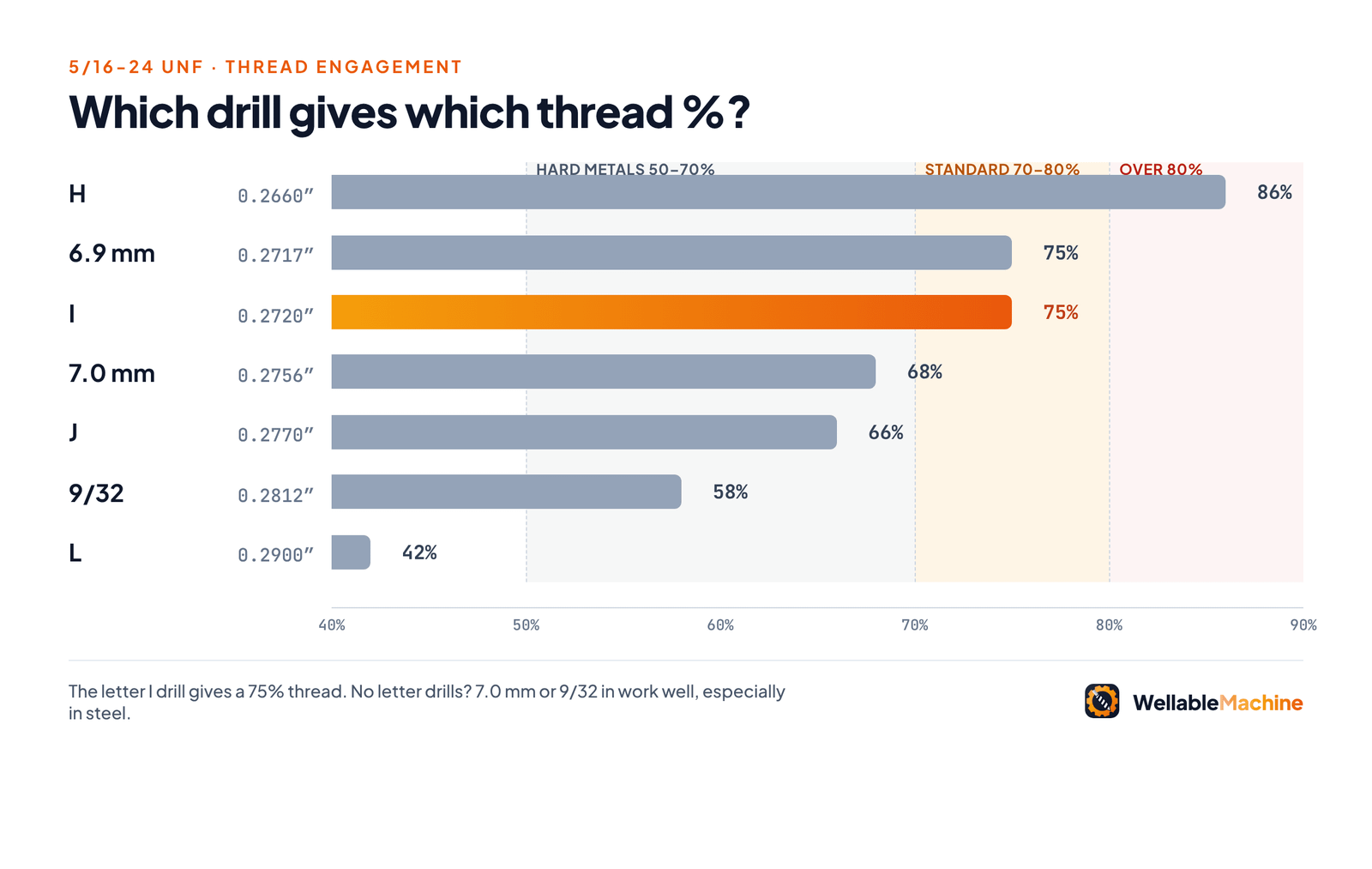
Which drill should you use? If you own letter drills, use I. If not, a 6.9 mm drill is practically identical, and 7.0 mm gives about 68% thread, which is ideal for steel. A 9/32 in drill from a standard fractional set gives about 58%, which is still fine for most automotive brackets and the best choice in stainless. Avoid 17/64 in: at 0.266 in it is close to an H and makes the tap work much harder. Our number and letter drill size chart lists every letter size.
Clearance Hole Sizes for a 5/16 in Bolt
Clearance holes are the same as for 5/16-18 bolts:
| Fit | Drill | Inches | mm | Use it for |
|---|---|---|---|---|
| Close fit | P | 0.3230 | 8.20 | Accurate location |
| Free fit | Q | 0.3320 | 8.43 | General assemblies |
| Loose fit | 11/32 | 0.3438 | 8.73 | Frames, slotted brackets |
5/16-24 vs. 5/16-18 vs. M8
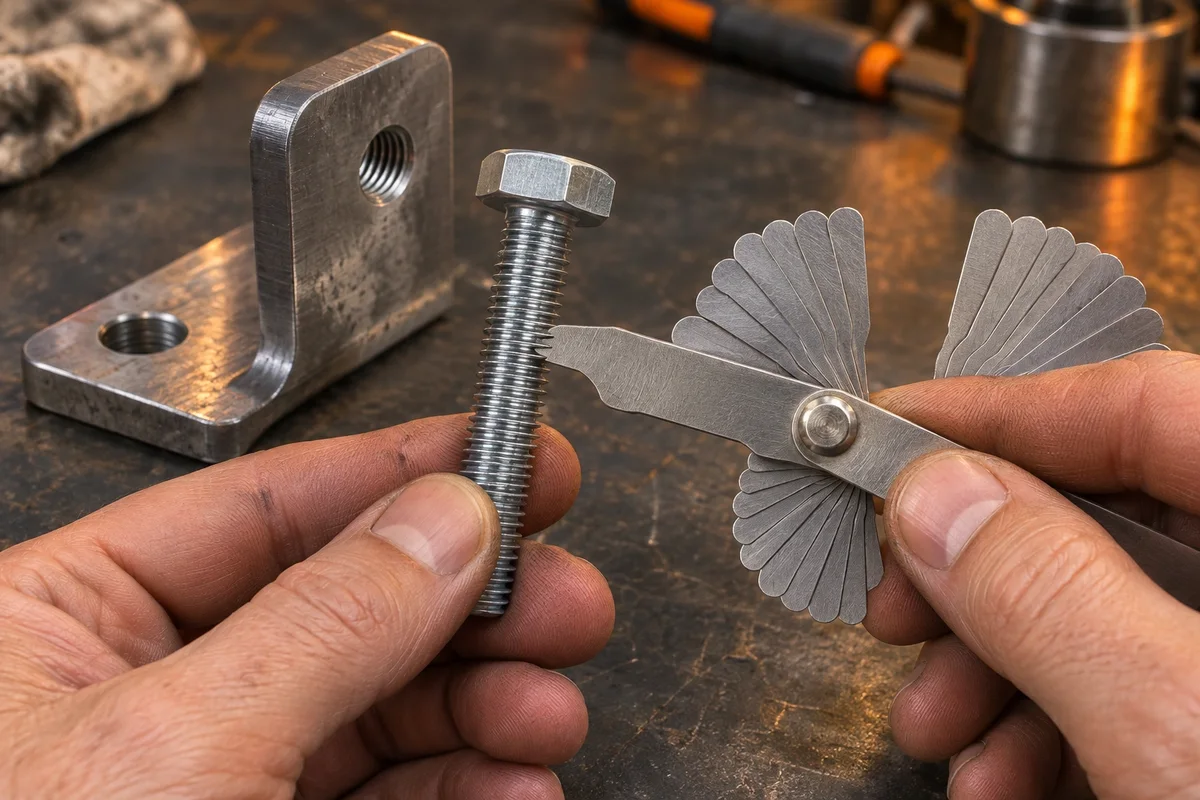
These three bolts are nearly the same diameter. In a mixed bin, a thread gauge is the only reliable way to tell them apart.
| Thread | Diameter | Pitch | Tap drill | Typical use |
|---|---|---|---|---|
| 5/16-24 UNF | 7.94 mm | 1.058 mm (24 TPI) | I (0.272 in) | Cars, trailers, motorcycles |
| 5/16-18 UNC | 7.94 mm | 1.411 mm (18 TPI) | F (0.257 in) | General hardware, machinery |
| M8 × 1.25 | 8.00 mm | 1.25 mm | 6.8 mm | Metric vehicles and machinery |
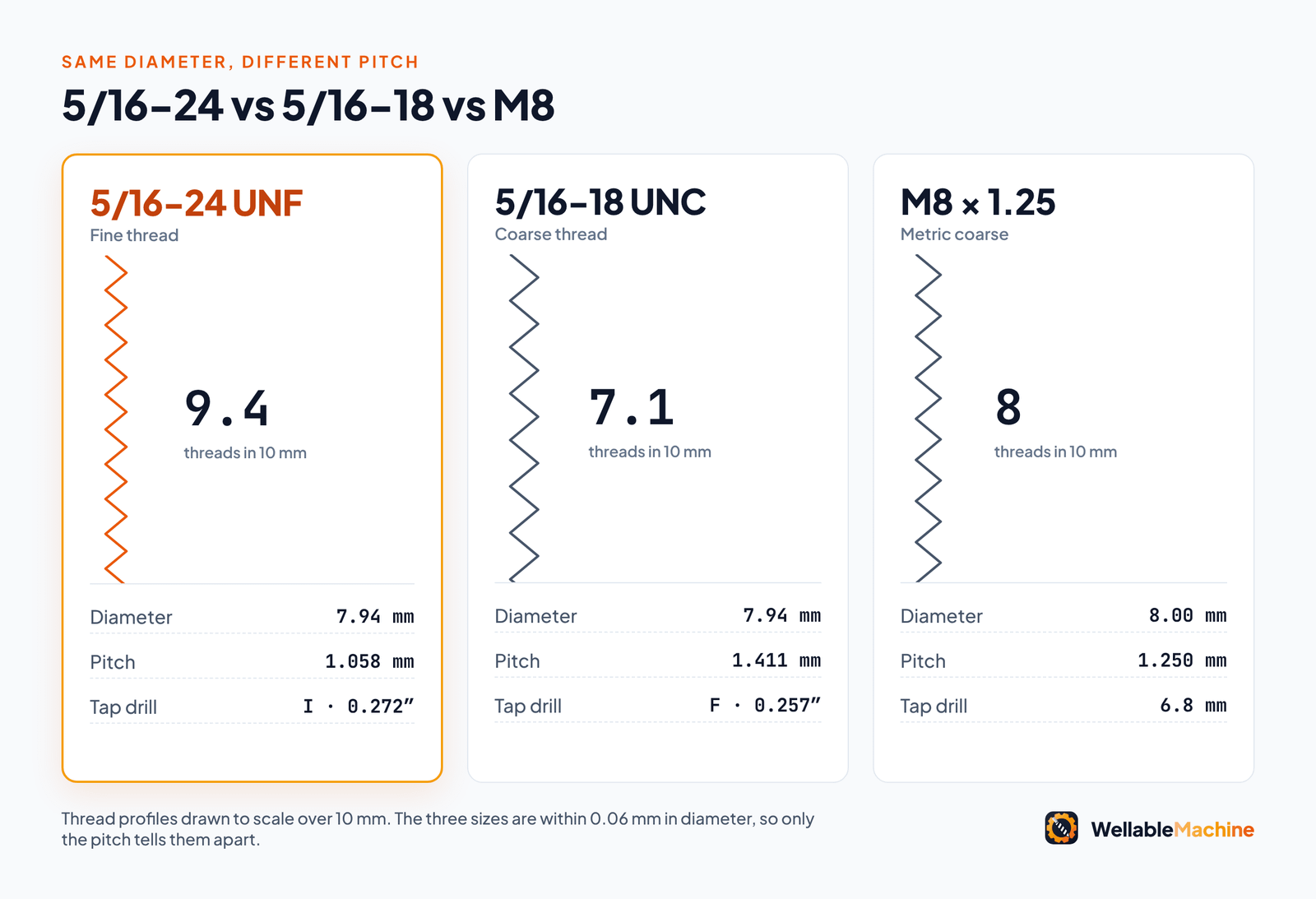
Forcing a 5/16-18 bolt into a 5/16-24 hole ruins both threads within a turn. For the coarse version, see the 5/16-18 tap drill size; for metric, see the M8 tap drill size.
Other 5/16-24 Hole Sizes You Might Need
- Forming (roll) tap: about 0.295 in, which is an M drill (7.5 mm).
- Heli-Coil / STI insert: a 21/64 in drill, then a 5/16-24 STI tap.
- Counterbore for a socket head cap screw: 17/32 in diameter, 5/16 in deep.
How to Drill and Tap a 5/16-24 Hole
- Mark and center punch the hole so the drill starts exactly where you want it.
- Drill with a I bit. In aluminum, run about 1,400 RPM; in mild steel, about 850 RPM; in stainless, slow down to about 400 RPM with steady pressure and cutting oil. Our guide on how to drill stainless steel explains why stainless needs low speed and constant feed.
- Break the sharp edge with a countersink. A small chamfer guides the tap in and keeps a raised burr from forming around the hole.
- Start the tap straight. Clamp the part and use a guide. On a car or trailer where you can’t use a drill press, a hardened drill guide block held against the surface keeps both drill and tap square.
- Work in short strokes. Turn forward until you feel resistance build, then reverse slightly to snap the chip. Keep the flutes wet with tapping fluid the whole time.
- For blind holes, drill at least 0.13 in (3 pitches) deeper than the full thread you need, and finish with a bottoming tap.
Repairing a thread on a vehicle often means drilling in a tight spot; cobalt bits from the best drill bits for stainless steel list hold up best in hardened brackets.
Which 5/16-24 Tap Should You Use?
At 5/16 in, fine threads tap easily by hand. For blind holes in castings, finish with a bottoming tap to get full threads near the bottom.
| Tap type | Best for | Notes |
|---|---|---|
| Taper tap | Starting threads by hand in hard material | Long chamfer; the easiest to start straight |
| Plug tap | Through-holes and most blind holes | The everyday hand tap |
| Bottoming tap | Full threads to the bottom of blind holes | Use only after a plug or taper tap |
| Spiral point (gun) tap | Through-holes, power tapping | Pushes chips ahead; strong core, fewer breaks |
| Spiral flute tap | Blind holes, power tapping | Lifts chips up and out of the hole |
| Forming (roll) tap | Aluminum, brass, mild steel | No chips; needs a larger M hole |
Tapping 5/16-24 in Different Materials
The hole size rarely changes from one metal to another, but the fluid, tap and technique do. Here is a quick guide for 5/16-24 work.
| Material | Recommended drill | Tapping fluid | Tips |
|---|---|---|---|
| Aluminum | I | Light oil or WD-40 | Clear chips often |
| Mild steel | I | Sulfurized cutting oil | Standard plug tap works well |
| Stainless (304/316) | J or 9/32 | Heavy tapping paste | Cobalt tap, slow steady turns |
| Brass and bronze | I | Light oil or dry | Cuts cleanly; avoid high-rake taps |
| Cast iron | I | Dry or air blast | Common on brake and suspension parts |
How Deep Should a 5/16-24 Thread Be?
How much thread you need depends on what the hole is made of. Softer materials need longer engagement so the internal thread doesn’t strip before the screw breaks:
- Steel: 1 × diameter, 5/16 in.
- Cast iron: 1.5 × diameter, 15/32 in.
- Aluminum: 2 × diameter, 5/8 in, or a Heli-Coil.
Where Is 5/16-24 Used?
5/16-24 bolts hold brake caliper brackets, alternator and accessory brackets, intake manifolds, axle and suspension parts on many US vehicles, as well as trailer hitches and motorcycle components. The fine pitch resists vibration better than 5/16-18.
Common 5/16-24 Tapping Problems (and How to Fix Them)
- Stripped thread in a cast aluminum part: a 5/16-24 Heli-Coil gives a stronger repair than the original.
- No letter drill: use 7.0 mm or 9/32 in instead of I.
- Bolt binds after two turns: it may be M8 or 5/16-18.
- Tap broke in a blind hole: see our guide on how to remove a broken tap.
Frequently Asked Questions
5 quick answers from our editors
01What size drill bit for a 5/16-24 tap?
An I drill (0.272 in). It gives a 75% thread.
02What fractional drill can I use for 5/16-24?
9/32 in (0.281 in). It gives about 58% thread, which is easy to tap and strong enough for most jobs.
03What metric drill for 5/16-24?
6.9 mm, or 7.0 mm for easier tapping in steel.
04What size clearance hole for 5/16-24?
P (0.323 in) for a close fit or Q (0.332 in) for a free fit.
05What size Heli-Coil drill for 5/16-24?
21/64 in, then the 5/16-24 STI tap.
Bottom Line
For a 5/16-24 thread, drill with an I bit (0.272 in) or 6.9 mm. Use 7.0 mm or 9/32 in if you lack letter drills or are tapping steel and stainless, and P or Q for clearance. Check the pitch before you assemble. For more sizes, see our tap drill size chart.