Types of Drill Bits: 12 Common Bits and What Each One Is For
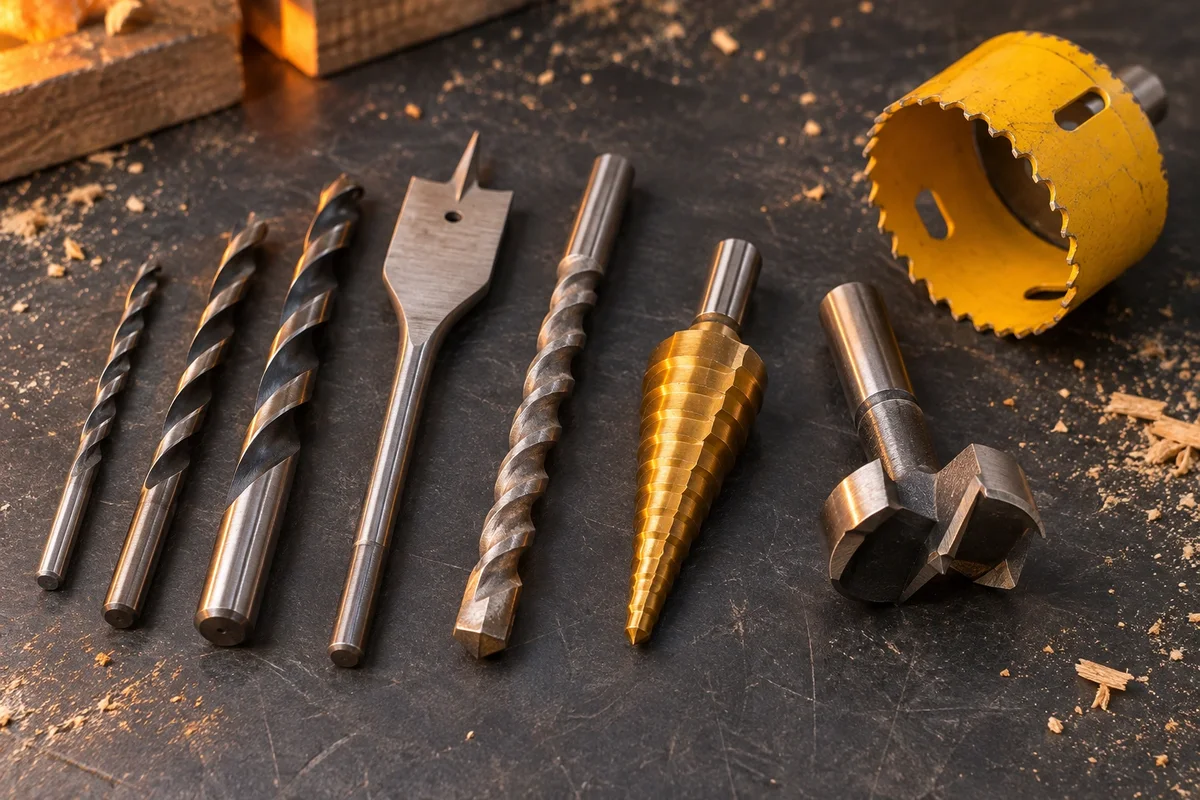
Quick answer: the most common types of drill bits are twist bits (general purpose for metal, wood and plastic), brad point bits (clean holes in wood), spade bits (fast, large holes in wood), Forstner bits (flat-bottomed holes in wood), masonry bits (brick, block and concrete), SDS bits (concrete with a rotary hammer), step bits (sheet metal), hole saws (large holes), and tile and glass bits. Pick the type based on the material first, then on the hole size and finish you need.
Walk into any hardware store and you’ll see dozens of drill bits that look similar but behave very differently. This guide explains every common type in plain language, which materials each one is for, what they’re made of, and how to choose the right bit for your next job.
Drill Bit Types at a Glance

| Bit type | Best for | Typical sizes | Key feature |
|---|---|---|---|
| Twist bit (jobber) | Metal, wood, plastic | 1/16–1/2 in | Spiral flutes; the all-rounder |
| Brad point bit | Wood | 1/8–1/2 in | Center spur and sharp spurs for clean entry |
| Spade (paddle) bit | Wood, fast rough holes | 1/4–1-1/2 in | Flat blade; cheap and fast |
| Auger bit | Deep holes in wood | 1/4–1 in | Screw tip pulls the bit in |
| Forstner bit | Flat-bottomed holes in wood | 1/4–2+ in | Clean, flat holes; overlapping holes |
| Masonry bit | Brick, block, mortar | 1/8–1 in | Carbide tip; use with hammer drill |
| SDS-plus / SDS-max bit | Concrete, stone | 3/16–1-1/2 in | Fits rotary hammers; fast in concrete |
| Step (unibit) bit | Sheet metal, plastic | 1/8–1-3/8 in | Many sizes in one bit; clean holes |
| Hole saw | Large holes in wood, metal, plastic | 3/4–6 in | Cuts a ring; leaves a plug |
| Tile / glass bit | Ceramic tile, glass, mirrors | 1/8–1/2 in | Spear-shaped carbide tip |
| Diamond core bit | Porcelain tile, stone, glass | 1/4–3 in | Diamond grit; use with water |
| Countersink bit | Flush screw heads | 1/4–1 in | Cone-shaped cutter |
Bits for Metal
Twist drill bits
The twist bit is the drill most people picture: a round shank with two spiral flutes and a pointed tip, usually 118° or 135°. It is designed for metal but works in wood and plastic too. The standard length is called “jobber” length; shorter “stub” or “screw machine” bits are stiffer and more accurate, and longer “taper” or “aircraft” bits reach deeper. You can read more about the design in the drill bit reference.
Twist bits also come in four size series in the US: fractional, number, letter and metric. If you’ve seen a size like “#7” or “F” on a chart, our number and letter drill size chart explains them.
Step bits
A step bit is a cone with stair-step edges, each step a different diameter. One bit drills clean, round holes in many sizes in thin sheet metal, electrical panels and plastic. It also deburrs as it cuts. Step bits are perfect for material up to about 1/8 in thick; they’re not meant for thick metal.
Cobalt and carbide bits
For stainless and hard steel, the shape is the same twist design, but the material changes. Cobalt (M35 or M42) bits stay hard when hot, and carbide bits cut even hardened steel. See our guides to the best drill bits for stainless steel and the best drill bits for hardened steel.
Bits for Wood
Brad point bits
Brad point bits have a sharp center spur that locates the hole exactly and two outer spurs that slice the wood fibers before the bit cuts. The result is a clean hole with no tear-out on the surface. They’re the best choice for furniture, dowel holes and cabinetry.
Spade bits
Spade bits are flat blades with a center point. They’re cheap and fast, which makes them popular for running cables and pipes through studs. The hole is rough and they tear out on exit, so they’re not for fine work.
Auger bits
An auger bit has a threaded screw tip that pulls it into the wood and a large single flute that clears chips from deep holes. Electricians and timber framers use them for holes through thick beams. Use them in a powerful, low-speed drill.
Forstner bits
Forstner bits cut flat-bottomed, very clean holes and can overlap or start on an edge. They’re used for concealed hinges, pocket holes for magnets and decorative work. Run them slowly, ideally in a drill press.
Bits for Masonry and Concrete
Masonry bits
Masonry bits have a wide carbide tip brazed onto a steel body. In hammer mode, the drill pounds the tip into the material while it turns, crushing brick, block and mortar. They work in a hammer drill; in an ordinary drill they cut very slowly.
SDS-plus and SDS-max bits
SDS bits fit rotary hammers, which hit far harder than a hammer drill. They have grooves in the shank instead of a round shank, so the bit can slide back and forth in the chuck. For concrete holes over about 1/4 in, an SDS rotary hammer is much faster than a hammer drill.
Bits for Tile and Glass
- Spear-point tile and glass bits have a carbide tip ground to a spear shape. They work in ceramic wall tile, glass and mirrors at low speed, with water, and with no hammer action.
- Diamond core bits grind through porcelain tile, natural stone and glass. Keep them wet and start at an angle, then bring the bit upright.
Hole Saws and Specialty Bits
- Hole saws cut a ring-shaped groove and leave a plug, so they can make large holes (3/4–6 in) with little power. Bi-metal hole saws handle wood and thin metal; carbide-tipped hole saws handle tougher materials.
- Countersink bits cut a cone so flat-head screws sit flush.
- Counterbore and plug cutters make recessed holes and matching wood plugs.
- Center drills and spot drills start holes accurately in metal before a twist drill.
Drill Bit Materials and Coatings
| Material / coating | Best for | Notes |
|---|---|---|
| Carbon steel | Soft wood only | Cheap; dulls fast in metal |
| High-speed steel (HSS) | Wood, plastic, aluminum, mild steel | The standard for twist bits |
| Black oxide HSS | General use | Slight rust and heat resistance |
| Titanium nitride (TiN) coated | Mild steel, production work | Lower friction; coating wears off when sharpened |
| Cobalt (M35, M42) | Stainless steel, hard steel | Same color all the way through; can be sharpened |
| Carbide (solid or tipped) | Hardened steel, masonry, tile | Very hard but brittle |
| Diamond | Porcelain, glass, stone | Grinds instead of cuts; needs water |
Shank Types
- Round shank: standard for most twist bits; fits any 3-jaw chuck.
- Hex shank (1/4 in): fits impact drivers and quick-change chucks; won’t slip.
- Reduced shank: lets a large bit (over 1/2 in) fit a 1/2 in or 3/8 in chuck.
- SDS-plus / SDS-max: only for rotary hammers.
How to Choose the Right Drill Bit
- Start with the material. Metal → twist or step bit; wood → brad point, spade, auger or Forstner; masonry → masonry or SDS; tile and glass → spear or diamond.
- Then the hole size. Over about 1-1/2 in, use a hole saw.
- Then the finish. Visible wood holes need brad point or Forstner; hidden holes can use spade bits.
- Then the tool. Hex shanks for impact drivers, SDS for rotary hammers, round shanks for drills and drill presses.
- For tapped holes, use the exact twist drill from a tap drill size chart.
Caring for Your Drill Bits
- Use the right speed: slow for large bits and hard materials, fast for small bits and soft materials.
- Use cutting oil in metal and water with tile and diamond bits.
- Store bits in an index so edges don’t knock together.
- Sharpen HSS and cobalt twist bits when they start to rub; see how to sharpen drill bits.
Frequently Asked Questions
6 quick answers from our editors
01What are the main types of drill bits?
Twist, brad point, spade, auger, Forstner, masonry, SDS, step, hole saw, tile and glass, and diamond core bits.
02What drill bit is best for metal?
HSS twist bits for mild steel and aluminum, cobalt bits for stainless, and carbide for hardened steel. Step bits are best for thin sheet metal.
03What drill bit is best for wood?
Brad point bits for clean, accurate holes; spade bits for fast rough holes; Forstner bits for flat-bottomed holes; auger bits for deep holes.
04Can I use a wood bit on metal?
No. Brad point, spade and auger bits will be damaged and won’t cut metal properly. Use a twist bit.
05What is the difference between a masonry bit and an SDS bit?
Both have carbide tips. Masonry bits have round or hex shanks for hammer drills; SDS bits have a slotted shank for rotary hammers, which hit much harder.
06Are titanium drill bits better than cobalt?
Not for hard metals. Titanium-coated bits are HSS with a thin coating. Cobalt bits are a harder alloy all the way through and are better for stainless and tough steel.
Bottom Line
Choose a drill bit by material first: twist bits for metal, brad point or Forstner bits for clean wood holes, masonry or SDS bits for concrete, and spear or diamond bits for tile and glass. Then match the size, the finish you need, and the shank to your tool. Upgrade to cobalt for stainless and carbide for hardened steel and masonry, and you’ll have the right bit for almost any job. For exact sizes, see our drill bit size chart.