Brushless vs Brushed Drills: What Is the Difference?
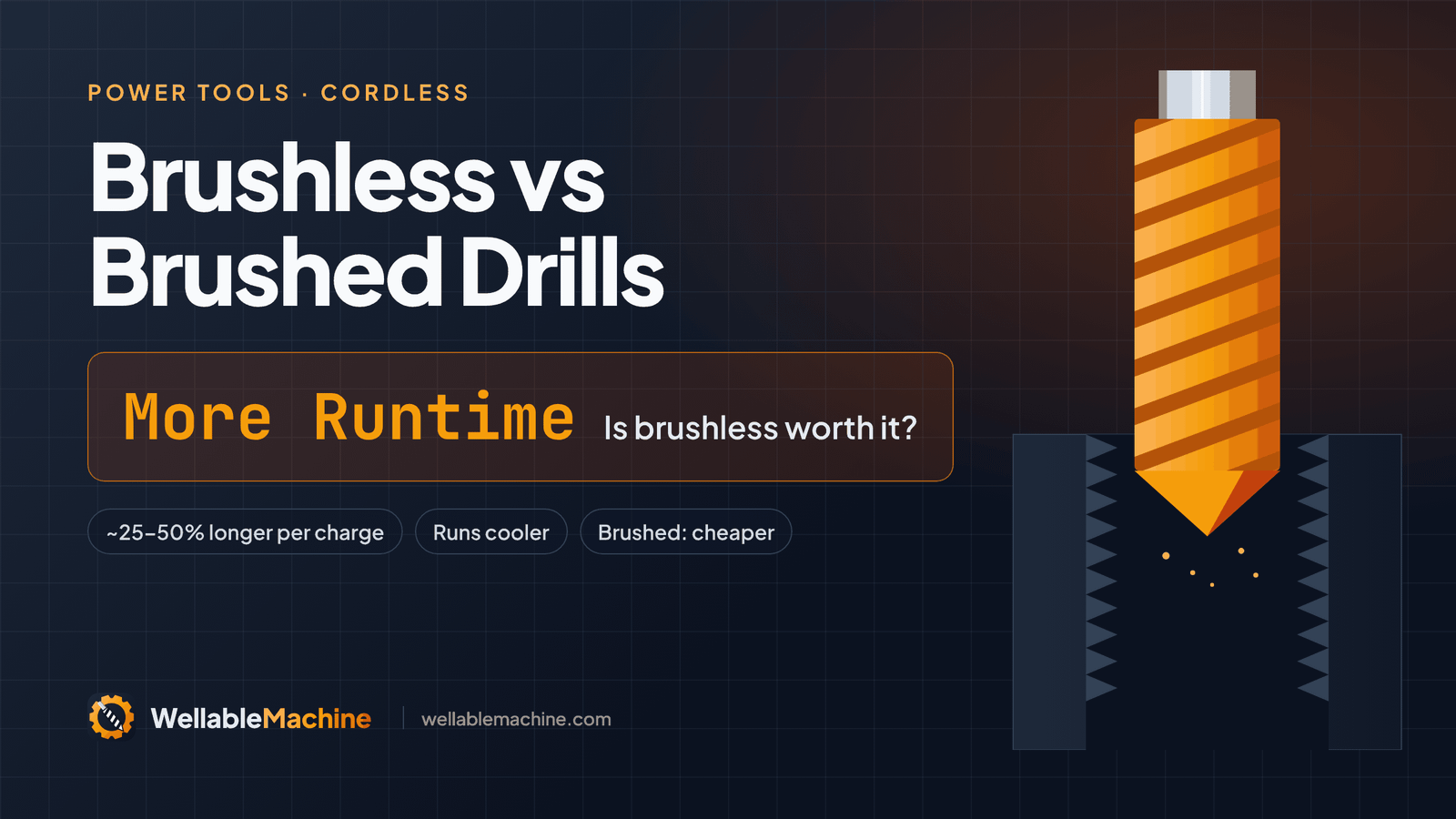
Quick answer: a brushless drill uses an electronically controlled motor with no carbon brushes, so it wastes less energy as heat, runs roughly 25–50% longer per battery charge, delivers more power for its size and needs less maintenance. A brushed drill is simpler and cheaper and is perfectly good for occasional household use. If you drill often, use large bits or work on a cordless battery platform all day, brushless is worth the extra cost.
“Brushless” is printed on nearly every premium cordless tool, and it usually adds a noticeable amount to the price. The difference is real, but it matters more for some users than others. Here’s what changes inside the tool, how much difference it makes in practice, and how to decide which type to buy.
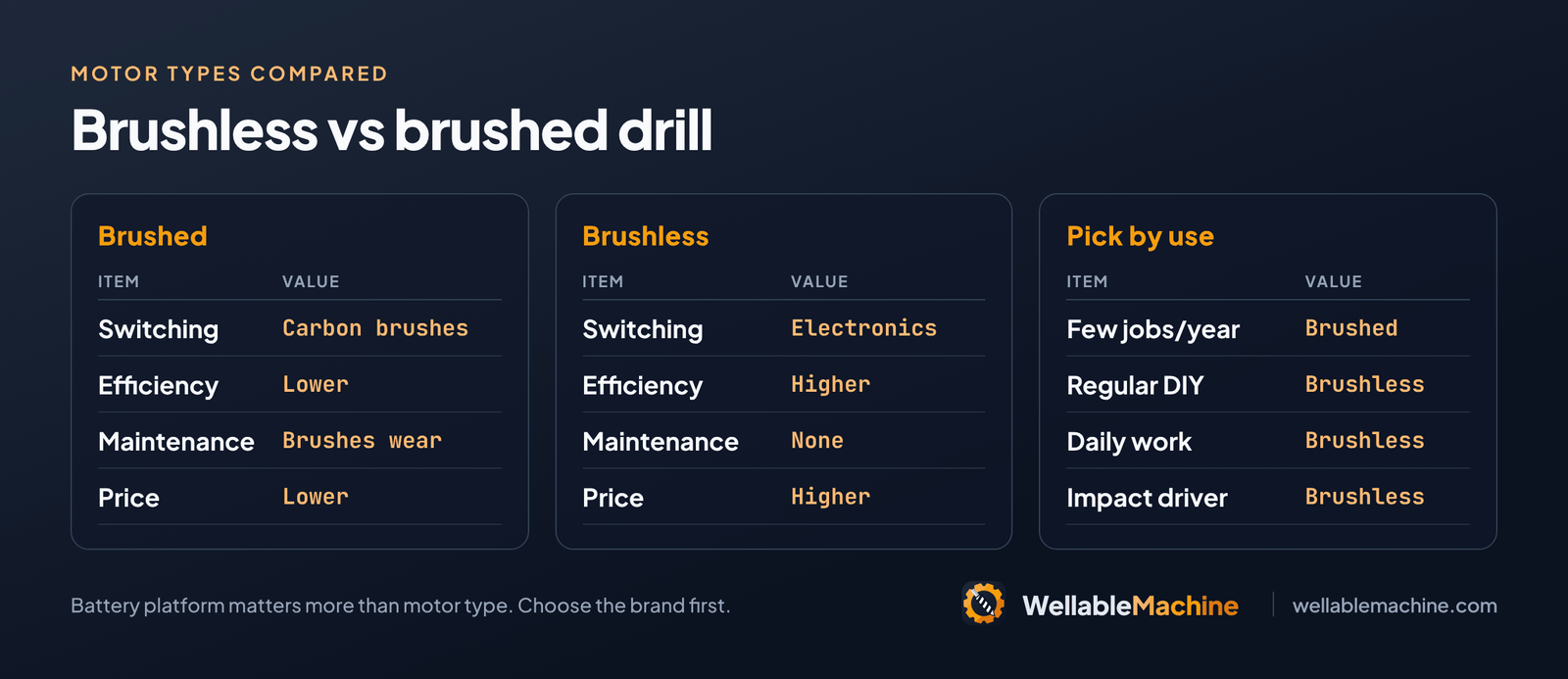
Brushless vs Brushed at a Glance
| Brushed | Brushless | |
|---|---|---|
| How the motor switches | Carbon brushes rub on a commutator | Electronics switch the coils |
| Efficiency | Lower; more energy lost as heat and friction | Higher; more battery energy reaches the chuck |
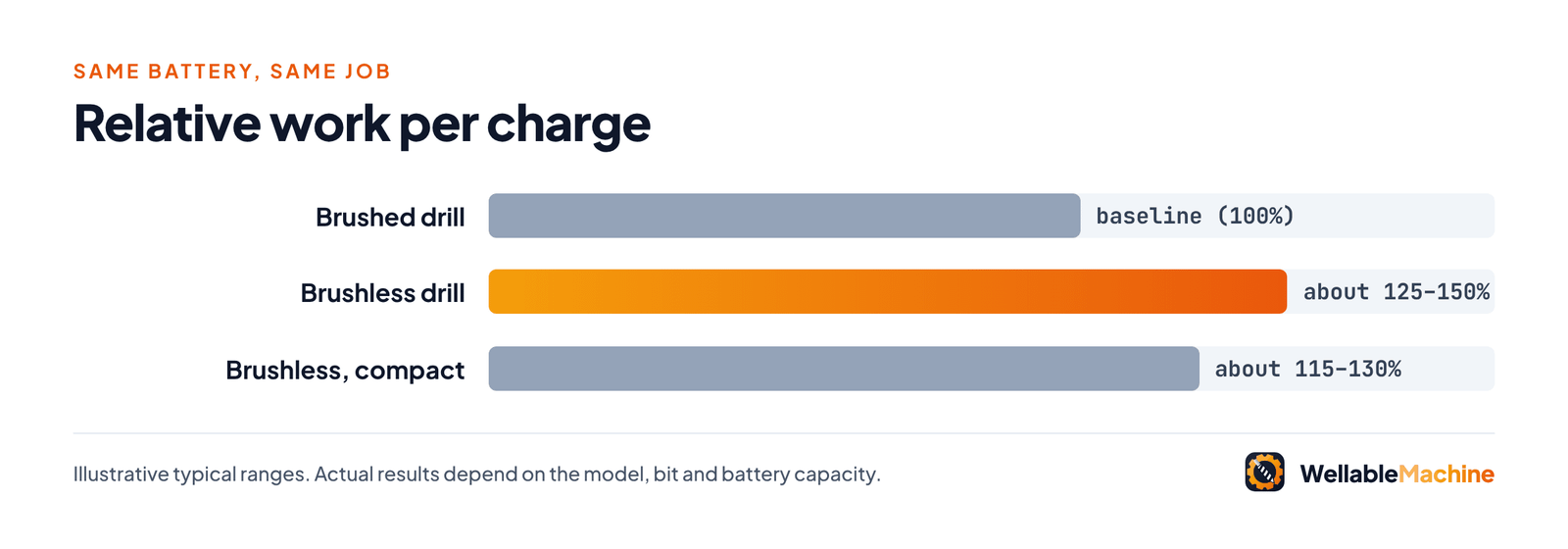
| Runtime per charge | Baseline | Typically 25–50% more |
| Power for its size | Good | Higher; tools can be shorter and lighter |
| Heat | Runs warmer under load | Runs cooler |
| Maintenance | Brushes wear and eventually need replacing | No brushes to wear |
| Price | Lower | Higher, often 30–60% more |
| Best for | Occasional DIY, light jobs | Frequent use, big bits, pros |
How a Brushed Motor Works
In a brushed motor, the spinning part (the armature) carries the coils. Two spring-loaded carbon blocks, the brushes, press against a segmented ring called the commutator. As the armature turns, the brushes switch current from one coil to the next, keeping the motor spinning. It is a simple, proven design that has powered drills for a century. The downsides come from the rubbing contact: friction, sparking, heat, brush dust and wear. Brushes last a long time in light use, but eventually they need replacing.
How a Brushless Motor Works
A brushless motor turns the design inside out. Permanent magnets spin on the rotor, and the coils are fixed in the housing. Instead of brushes, a small circuit board reads the rotor position and switches the coils electronically. With no rubbing contact, there is less friction and heat, and the electronics can adjust power to the load: they deliver more current when the bit is working hard and less when it isn’t. The brushless DC motor article explains the electronics in more detail.
What Difference Does It Make in Practice?
- Runtime: the most noticeable difference. On the same battery, a brushless drill typically drives more screws or drills more holes before needing a charge, often around a third more.
- Power under load: brushless drills hold their speed better when drilling large holes with spade bits, augers or hole saws, and they stall less.
- Size and weight: a brushless motor is more compact for the same output, so brushless drills are often shorter, which helps in tight spaces.
- Heat: during long jobs, such as drilling dozens of holes in steel or mixing thinset, brushed tools get hot and may shut down sooner.
- Tool life: both can last for years. Brushless tools avoid brush wear, but the electronics can fail if the tool is abused or gets wet.
For an occasional job, such as hanging pictures, assembling furniture or drilling a few holes, you probably won’t notice the difference. For a weekend deck build or daily work, you will.
Which Should You Buy?
| You are… | Recommendation |
|---|---|
| A homeowner doing occasional small jobs | Brushed is fine; spend the savings on good bits |
| A DIYer doing regular projects | Brushless, especially for the drill you use most |
| A tradesperson using tools daily | Brushless across the board |
| Buying an impact driver | Brushless is a big upgrade; impact drivers run hard |
| On a tight budget | Brushed drill + brushless impact, or a brushed combo kit |
Battery platform matters more than motor type. Pick a brand whose batteries fit the other tools you’ll want, then choose brushed or brushless within that range. If you are deciding between tool types too, our comparisons of impact driver vs drill and hammer drill vs drill explain which tools you actually need.
Common Myths
- “Brushless is always more powerful.” Not always. A high-end brushed drill can out-torque a budget brushless one. Compare the actual specs.
- “Brushed motors wear out quickly.” In household use, brushes often outlast the battery. They are a concern mainly for heavy daily use.
- “Brushless means better batteries.” The battery is separate. A brushless tool uses its battery more efficiently, but battery capacity (Ah) still sets the runtime.
Getting the Most From Any Drill
- Use sharp bits; a dull bit wastes more battery than any motor difference.
- Choose the right gear: low gear (1) for big bits and screws, high gear (2) for small bits.
- Match the speed to the bit; our drill speed chart has the numbers.
- Let a hot tool cool between heavy jobs, and store batteries partly charged in a cool, dry place.
Battery Size Matters as Much as the Motor
Runtime depends on the energy stored in the battery as well as on motor efficiency. Battery energy is roughly voltage × amp-hours: an 18 V 2.0 Ah pack holds about 36 watt-hours, while an 18 V 5.0 Ah pack holds about 90 watt-hours, two and a half times as much. A brushed drill on a 5.0 Ah pack will outlast a brushless drill on a 2.0 Ah pack every time.
Bigger packs are heavier, though, which is why many people keep a compact pack for overhead work and a larger one for drilling big holes. 12 V tools are lighter still and fine for cabinet and furniture work; 18–20 V tools suit general building jobs. The lithium-ion cells inside all modern packs last longest if you avoid storing them flat or in a hot vehicle.
Brushless in Other Cordless Tools
The benefit of a brushless motor grows with the load on the tool:
- Impact drivers: brushless models are smaller for the same torque and often have several speed modes. If you drive a lot of long screws, this is where brushless pays off most. Our impact driver vs drill guide explains when each tool fits.
- Hammer drills and rotary hammers: drilling concrete is a heavy, sustained load, so brushless motors run noticeably longer per charge. See hammer drill vs drill and SDS-plus vs SDS-max for heavier work.
- Circular saws and grinders: these draw the most current of any cordless tool, and brushless is close to essential for useful runtime.
- Small screwdrivers and light drills: the difference is small, and a brushed model is usually fine.
How to Tell If a Drill Is Brushless
Manufacturers like to advertise brushless motors, so look for “brushless” or “BL” on the housing, the box or the model description. Other clues: brushed drills often have small round caps on each side of the motor housing where the brushes can be replaced, and they show a visible spark through the vents when running. Brushless drills are usually shorter from chuck to back for the same power. When in doubt, check the model number on the maker’s website.
Brushes, Wear and Lifespan
Carbon brushes are wear parts. On a heavily used brushed drill they eventually wear down until the motor runs weakly or cuts out; on a drill used for weekend jobs they may outlast the batteries. Replacing brushes is cheap and simple on tools with external brush caps. A brushless motor has no brushes to wear, and its bearings and electronics usually outlast the rest of the tool. In practice, both kinds of drill are more often retired because of a worn chuck, a broken switch or batteries that no longer hold a charge than because of the motor.
Whatever motor you choose, sharp bits matter more for speed and battery life than most people expect. A dull bit makes any drill work harder; see how to sharpen drill bits and our guide to drill bit types.
Frequently Asked Questions
8 quick answers from our editors
01Is a brushless drill worth it?
For regular use, yes: longer runtime, more power and less heat. For occasional small jobs, a brushed drill is fine.
02How much longer does a brushless drill run?
Typically 25–50% more work per charge, depending on the tool and the job.
03Do brushless drills last longer?
They have no brushes to wear out, so the motor usually lasts longer under heavy use. Overall life also depends on the gearbox, chuck and electronics.
04Can I replace the brushes on a brushed drill?
On many models, yes; some have access caps, others need the housing opened.
05Are brushless drills quieter?
Slightly, because there is no brush noise, but gearbox and chuck noise are similar.
06Do brushless and brushed tools use the same batteries?
Within a brand’s platform, yes. The motor type doesn’t change the battery.
07Is brushless better for drilling concrete?
Yes. Concrete is a heavy, sustained load, so a brushless hammer drill runs longer per charge and stays cooler. For many holes, an SDS rotary hammer is the better tool; see how to drill into concrete.
08Does a brushless drill have more torque?
Not automatically. Torque depends on the motor size, gearing and electronics. Brushless motors make it easier to fit more torque into a smaller tool, so brushless models often have higher ratings, but compare the published figures.
Bottom Line
Brushless drills are more efficient, more powerful for their size and run cooler and longer; brushed drills are simpler and cheaper. Buy brushless if you use your drill often or for heavy work; buy brushed if you need a drill a few times a year. Either way, sharp bits and the right speed make the biggest difference to how well it drills.