How to Remove a Stuck Drill Bit From a Chuck (6 Fixes)
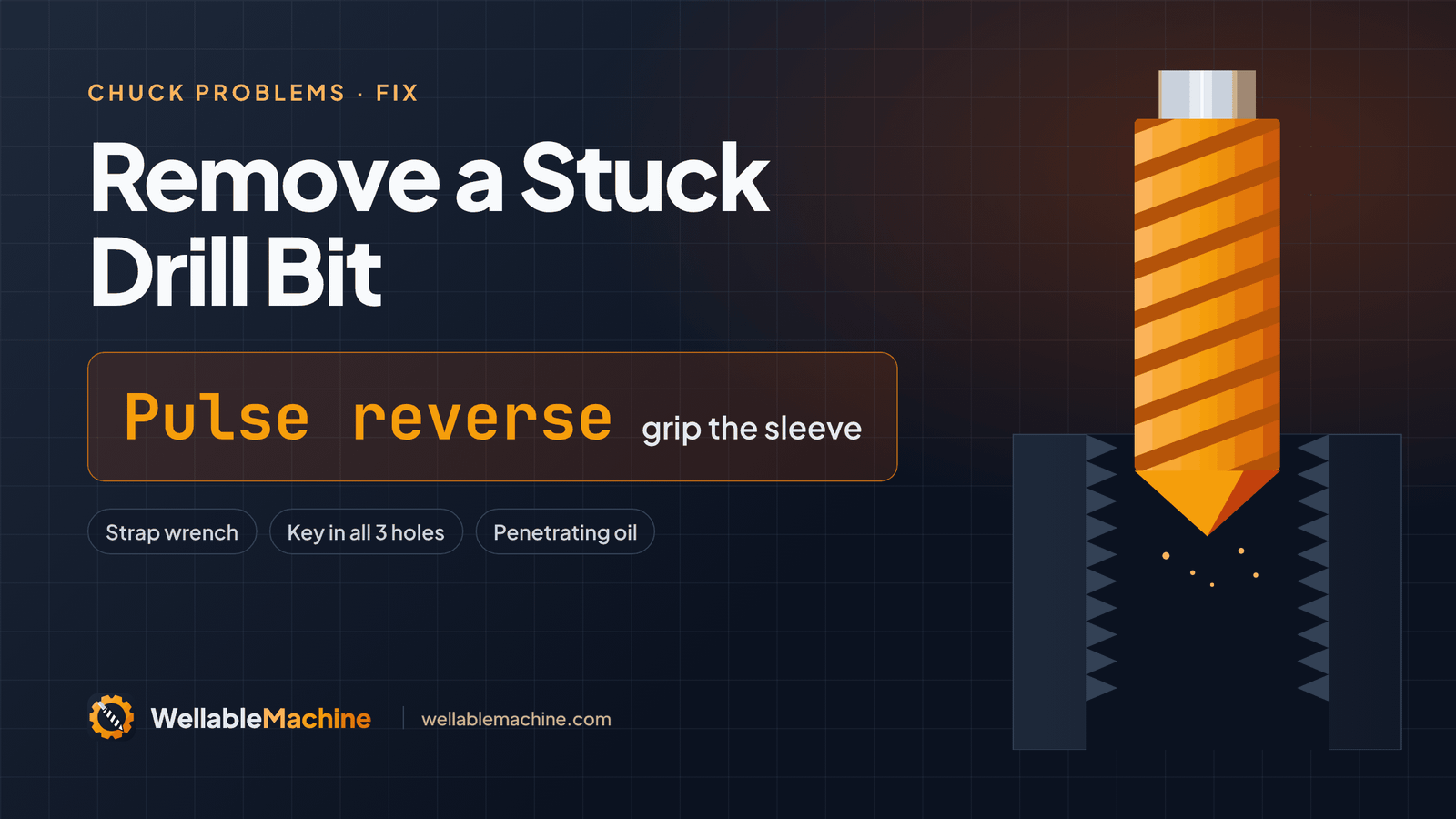
Quick answer: to free a drill bit stuck in a keyless chuck, grip the chuck sleeve firmly (a rubber jar opener or strap wrench helps), set the drill to reverse, and give the trigger a few short, sharp pulses so the motor breaks the chuck loose against your grip. For a keyed chuck, put the key in each of the three holes in turn and give it a firm turn, tapping the key handle with a mallet if needed. If the jaws themselves are seized or a bit has broken off inside, soak the chuck with penetrating oil, tap the sleeve with a mallet, and as a last resort remove the chuck from the drill.
A stuck bit is usually caused by a keyless chuck tightened too hard by a spinning drill, a bit that slipped and galled the jaws, or rust and dust packed into the chuck. Most can be freed in a minute without damage. This guide works through the fixes from gentlest to most drastic, covers keyed, keyless, SDS and impact driver chucks, and explains how to stop it happening again.
Why Drill Bits Get Stuck
A drill chuck is a three-jaw self-centering clamp driven by a threaded sleeve or a gear ring; the chuck (engineering) article explains how the jaws move. Anything that stops those jaws sliding back in their slots will trap the bit.
- Over-tightened keyless chuck: many keyless chucks tighten themselves as the drill works hard, especially when a big bit catches. The ratchet then holds so tightly that your hand can’t open it.
- Bit spun in the chuck: when a bit slips, the jaws score the shank and raise burrs. Those burrs wedge the bit in place.
- Dirt, rust or resin: drywall dust, concrete dust, rust or sap gets into the jaw slots and stops them moving.
- Broken bit: a bit snapped close to the jaws leaves a stub too short to grab.
- Damaged chuck: a bent jaw or a worn chuck can jam on a bit.
- SDS bits: a dry or dirty shank, or a bit used without grease, can stick in the tool holder.
Fixes by Chuck Type
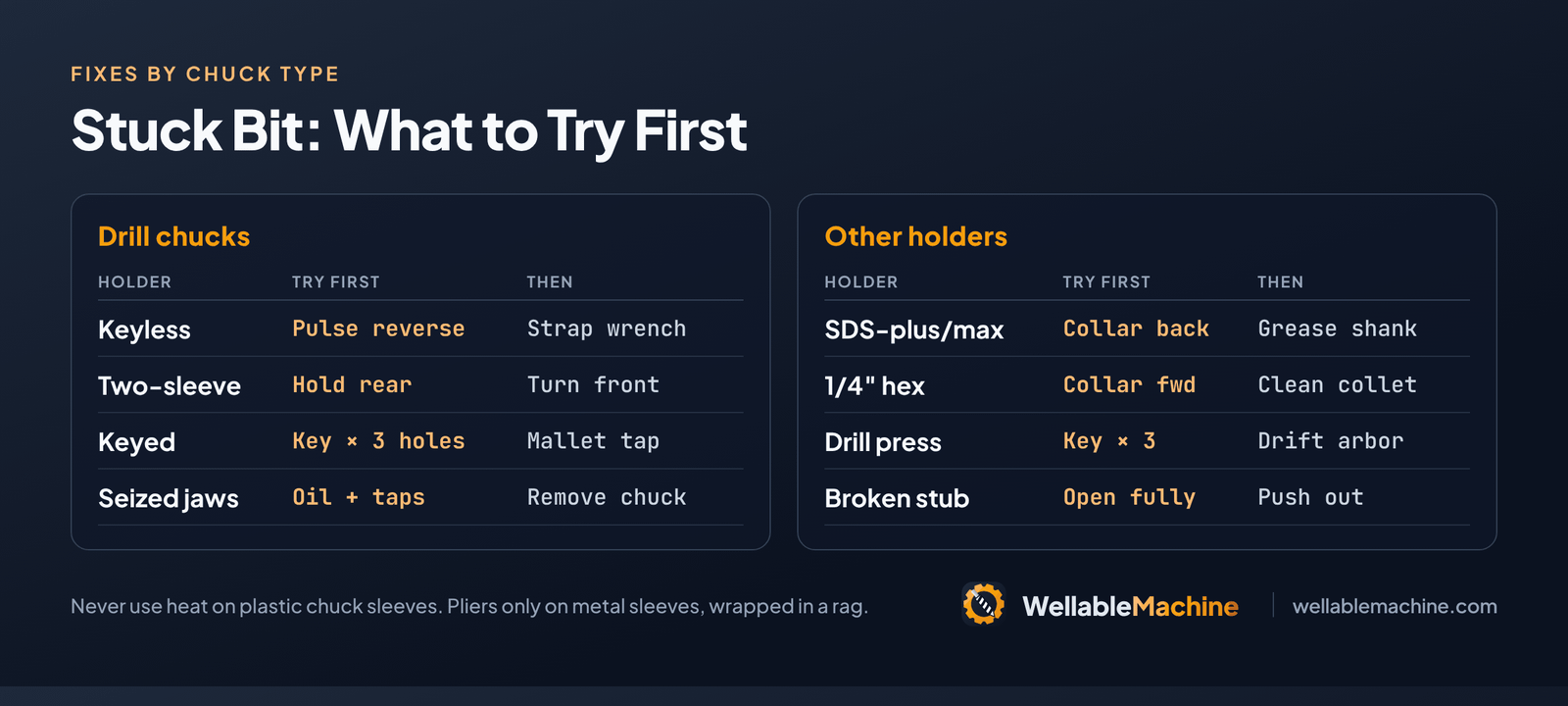
| Chuck | Try first | If that fails |
|---|---|---|
| Keyless (single sleeve) | Grip sleeve, pulse reverse | Strap wrench on sleeve; penetrating oil; tap with mallet |
| Keyless (two sleeve) | Hold the rear sleeve, turn the front sleeve by hand | Strap wrench on front sleeve, vise or pliers lightly on rear |
| Keyed | Key in each of the three holes, firm turn | Tap the key handle with a mallet; penetrating oil |
| SDS-plus or SDS-max | Pull the collar fully back and twist the bit | Grease, tap the bit sideways; clean the holder |
| 1/4 in hex (impact driver) | Pull the collar forward and wiggle the bit out | Pliers on the bit; clean the collet; check for a broken bit |
| Drill press (Jacobs taper) | Chuck key in all three holes | Remove the chuck from the arbor with wedges |
Method 1: Grip and Reverse (Keyless Chucks)
This is the quickest fix and uses the drill’s own motor to break the chuck free.
- Set the drill to reverse and the lowest speed setting. Set the clutch to the drill setting (not a screw setting).
- Grip the chuck sleeve as tightly as you can with one hand. A rubber jar opener, a piece of rubber pad or a leather glove helps a lot.
- Pulse the trigger briefly and sharply a few times. The motor turns the spindle against your grip, which loosens the chuck.
- Once it gives, open the chuck by hand as normal.
Keep your fingers off the jaws and the bit, and don’t hold the trigger down. This method works for most over-tightened keyless chucks.
Method 2: Strap Wrench or Rubber Grip
If your hand slips, wrap a rubber strap wrench or an oil filter strap around the chuck sleeve and turn it counterclockwise (as seen from the front) while holding the drill body. On a two-sleeve chuck, hold the rear sleeve with your hand or a second strap and turn the front one. Avoid steel pipe wrenches or locking pliers on plastic sleeves; they crack them. On metal sleeves, pliers with a rag wrapped around the sleeve can work.
Method 3: Chuck Key and Mallet (Keyed Chucks)
- Insert the key in one of the three holes and turn counterclockwise firmly.
- If it won’t move, try each of the other two holes. Sometimes one is easier.
- Still stuck? Hold the drill securely and give the key handle a sharp tap with a rubber or plastic mallet in the loosening direction.
- Check the key’s teeth and the chuck’s gear ring. Worn teeth slip, so replace a worn key.
Method 4: Penetrating Oil and Shock
When jaws are gummed with dust or rust, or a bit has galled in place:
- Point the chuck up and spray penetrating oil into the jaw openings around the bit. Leave it 15 to 30 minutes.
- Tap the chuck sleeve all around with a plastic or rubber mallet to help the oil in and break the jaws free.
- Try methods 1 to 3 again.
- For a bit galled into the jaws, clamp the bit’s shank gently in a vise (with soft jaws) and turn the whole drill by hand to unscrew the chuck from the bit.
Don’t use heat on a keyless chuck; the plastic sleeve will melt. A little heat with a hot-air gun on an all-metal keyed chuck can help, but let it cool before you handle it.
Method 5: Removing a Broken Bit Stub
- If the jaws still open: open them fully. The stub usually falls out or can be pulled with needle-nose pliers. If it’s lodged at the back, push it out from the front with a punch or a thin rod.
- If the jaws are jammed on the stub: grip any exposed part with locking pliers and turn the chuck to open it. If nothing is exposed, soak with oil and work methods 1 to 3.
- If nothing works: take the chuck off the drill (below), then work on it on the bench, where you can push the stub out from the back.
Method 6: Remove the Chuck
Most cordless and corded drill chucks screw onto the spindle and are held by a left-hand retaining screw inside the jaws.
- Open the jaws as far as possible (if they open) and look inside for the retaining screw.
- Remove it by turning clockwise (it’s a left-hand thread).
- Clamp a large hex key (3/8 in or 10 mm) in the jaws, or grip the chuck with a strap wrench.
- Give the hex key a sharp tap counterclockwise with a mallet to break the chuck loose from the spindle, then unscrew it.
- On the bench, soak the chuck, free the jaws, and either reuse it or replace it.
Replacement chucks are inexpensive. Match the spindle thread (commonly 3/8-24 or 1/2-20 UNF) and capacity. Our drill chuck sizes guide covers chuck threads and capacities.
Stuck SDS and Hex Bits
SDS bits lock in with balls that ride in slots on the shank. If a bit won’t come out, pull the locking collar all the way back, then twist and wiggle the bit as you pull. A sharp sideways tap on the bit can break it free. Afterward, clean the holder and grease the shank of every SDS bit before use; dry shanks wear the holder and stick. See SDS-plus vs SDS-max and how to use a rotary hammer.
Hex bits in impact drivers usually stick because the collet is full of debris or the bit’s groove is damaged. Pull the collar forward, wiggle the bit with pliers, then blow out the collet. A broken bit tip stuck deep in the collet can often be pulled with a magnet.
How to Stop Bits Getting Stuck
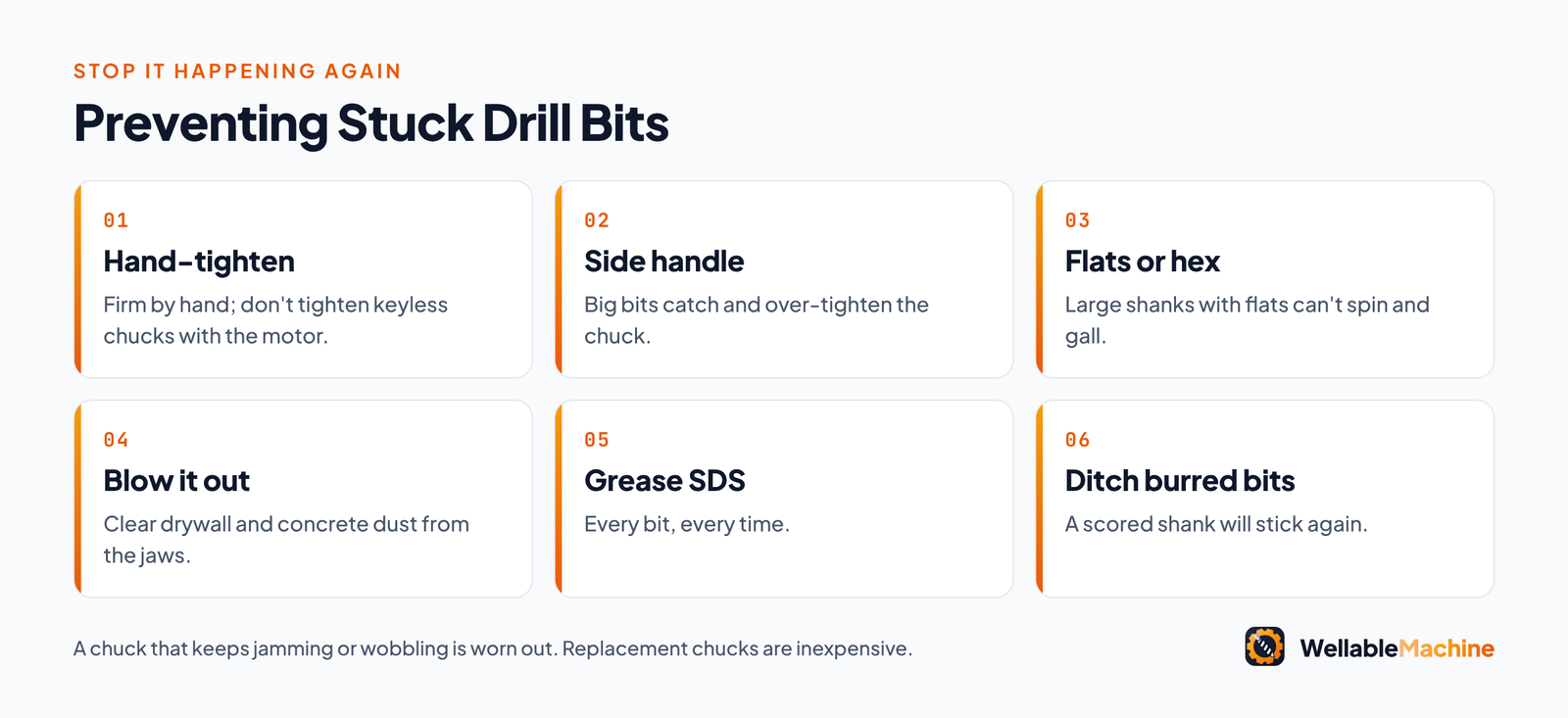
- Tighten keyless chucks by hand, firmly, but don’t use the motor to tighten them unless the drill has an auto-lock that is designed for it.
- Use a side handle and low gear with large bits so they don’t catch and over-tighten the chuck.
- Use bits with flats or hex shanks for large sizes so they can’t spin.
- Clean the chuck regularly with compressed air, especially after drilling drywall, concrete or wood resin.
- Grease SDS shanks every time.
- Replace damaged bits with burred shanks, which will stick again.
For the right way to fit and remove bits, see our guide on how to change a drill bit.
When to Replace the Chuck Instead
A chuck that jams repeatedly, wobbles, slips on bits or has cracked or chipped jaws is worn out. Cleaning and oiling won’t fix it. Replacing it costs far less than the bits and work it spoils, and it’s a quick job once you know the retaining screw is a left-hand thread.
Frequently Asked Questions
6 quick answers from our editors
01How do I get a stuck drill bit out of a keyless chuck?
Grip the sleeve tightly, set the drill to reverse, and pulse the trigger a few times. A rubber strap wrench helps if your hand slips.
02Why won’t my drill chuck open?
It’s usually over-tightened by the motor, or the jaws are packed with dust or rust. Try reverse-pulsing, then penetrating oil and tapping.
03How do I remove a broken drill bit from a chuck?
Open the jaws fully and pull it out with pliers, or push it out from the front. If the jaws are jammed on it, remove the chuck from the drill.
04Can I use pliers on a drill chuck?
Not on plastic sleeves; they crack. On a metal sleeve, wrap it in a rag first.
05How do I remove an SDS bit that’s stuck?
Pull the collar fully back and twist the bit out. Clean and grease the shank before reusing it.
06Is a stuck chuck a sign it needs replacing?
Not always. But if it keeps sticking, wobbles or won’t grip after cleaning, replace it.
Bottom Line
Start with the drill’s own motor: grip the sleeve and pulse reverse. Then try a strap wrench, the chuck key in every hole, and penetrating oil with light mallet taps. If the jaws are jammed or a stub is trapped, remove the chuck. Prevent repeats by tightening by hand, using a side handle with large bits, and keeping the chuck clean.