1/8 NPT Tap Drill Size: R Drill (0.339″) & Full NPT Chart
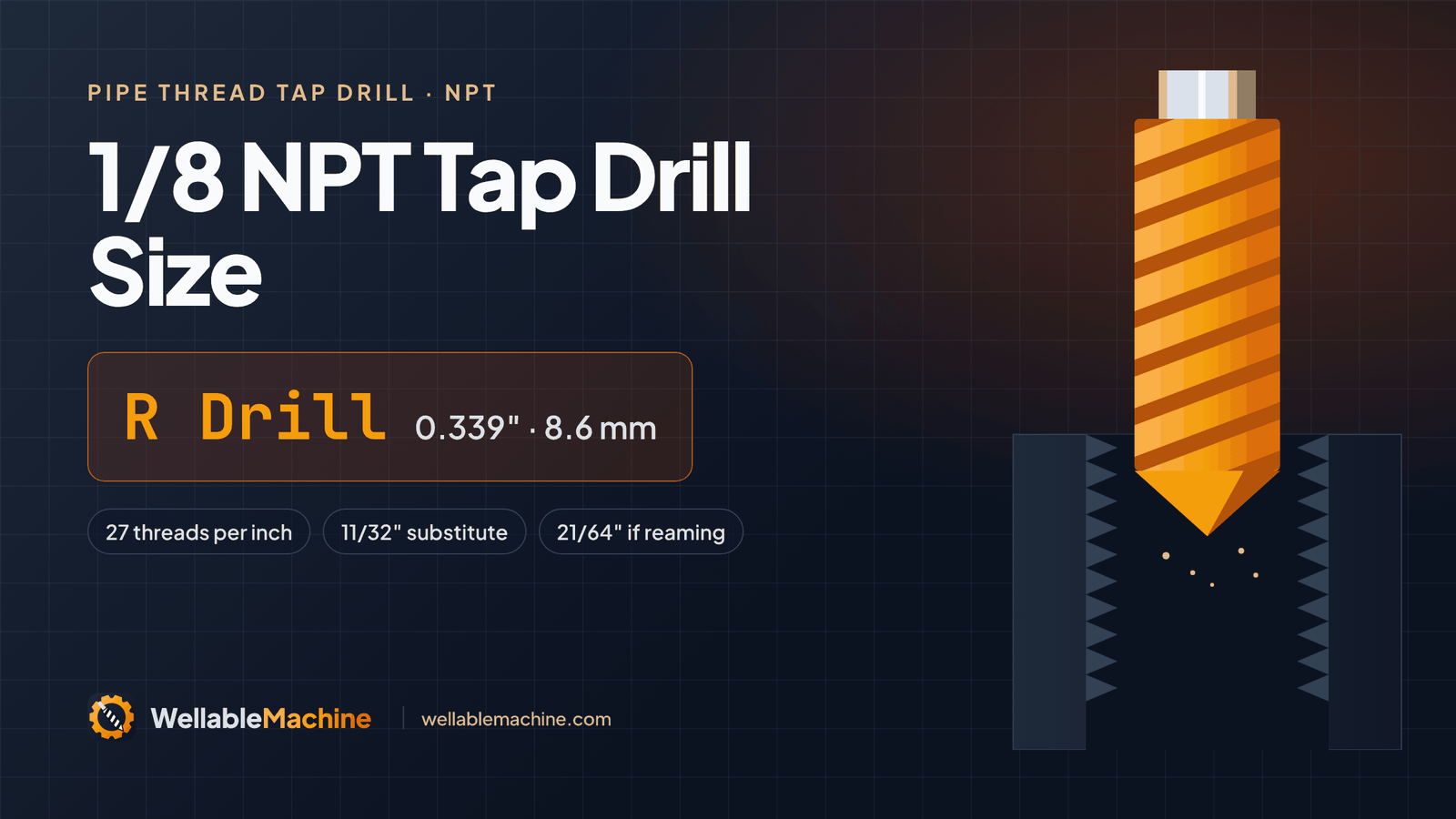
Quick answer: the standard tap drill for a 1/8-27 NPT pipe thread is an R drill (0.339 in / 8.6 mm) when you tap without a reamer. If you plan to ream the hole with a 1/8 NPT taper reamer first, drill 21/64 in (0.328 in). Many shops also use 11/32 in (0.344 in) as a common substitute for R because it is easy to find in fractional sets.
Pipe threads work differently from bolt threads. They are tapered, they seal by wedging, and the “1/8” in the name has nothing to do with the hole size. This guide explains all of that, gives you the drill sizes for every common NPT size, and shows how to tap a leak-free 1/8 NPT port.
1/8 NPT Thread Specifications
NPT stands for National Pipe Taper, the US standard for tapered pipe threads defined in ASME B1.20.1. The “1/8” is a nominal pipe size, a name left over from old pipe bore sizes. The actual outside diameter of 1/8 NPT pipe is 0.405 in (10.3 mm), much larger than 1/8 in. You can read about the history of these sizes in the National Pipe Thread reference.
| Specification | Value |
|---|---|
| Thread standard | NPT (ASME B1.20.1) |
| Nominal pipe size | 1/8 in |
| Threads per inch | 27 (pitch 0.941 mm) |
| Pipe outside diameter | 0.405 in (10.29 mm) |
| Taper | 1 in 16 on diameter (1°47′ per side) |
| Thread angle | 60° |
| Tap drill, no reamer | R = 0.339 in (8.6 mm) |
| Tap drill, with reamer | 21/64 = 0.328 in (8.3 mm) |
| Hand-tight engagement | about 4.5 threads (0.18 in) |
| Typical wrench make-up | 2–3 more turns after hand tight |
Why NPT Uses a Different Tap Drill Rule
A straight thread like 1/4-20 needs a hole near its minor diameter. A tapered thread is different: the tap grows wider as it goes deeper, so the hole only needs to match the small end of the thread. The tap cuts more material as it advances, and the taper is what makes the joint tight.
That’s also why reaming matters. A taper reamer pre-shapes the hole to the taper, so the tap only has to form threads instead of removing a wedge of metal. Reaming lets you start with a smaller 21/64 hole and still tap easily, which gives fuller threads near the top of the port. Without a reamer, the larger R drill keeps the tap from overloading.
NPT Tap Drill Size Chart
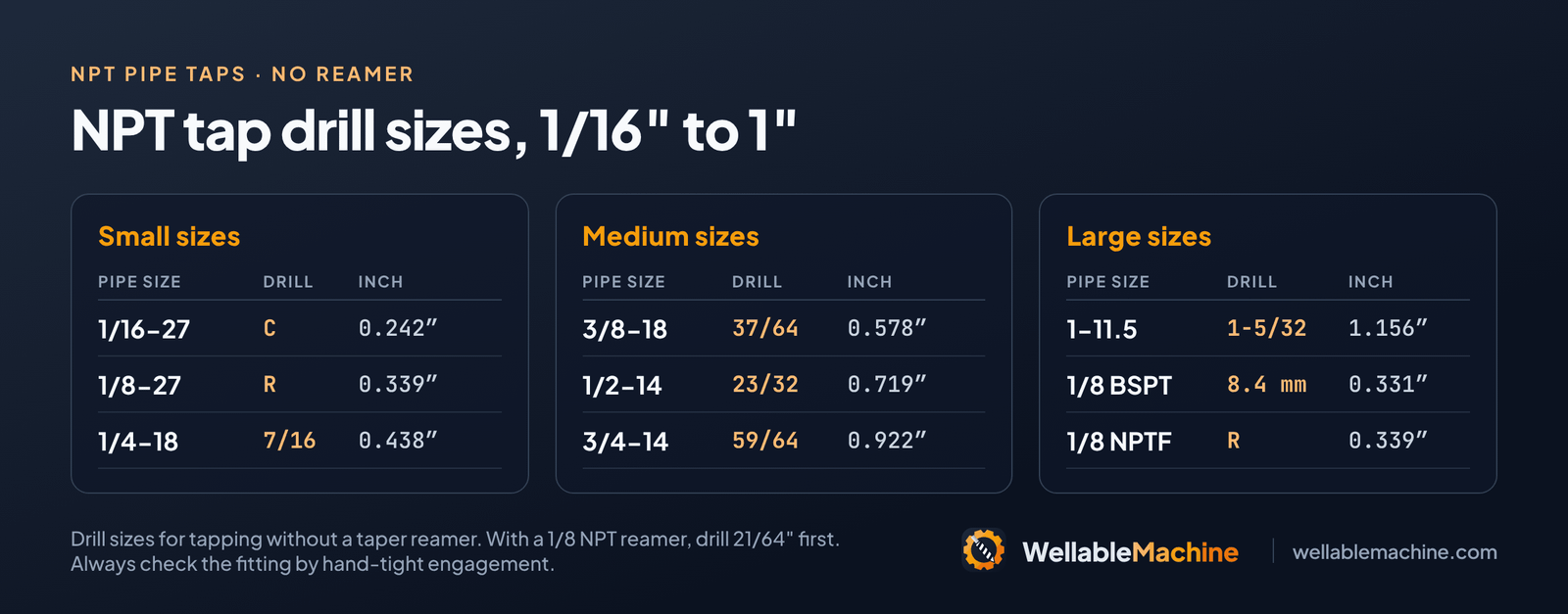
Here are the standard drill sizes for the common NPT sizes, tapping without a reamer. These match the charts published by tap makers and machinists’ references.
| NPT size | TPI | Pipe OD | Drill (no reamer) | Drill (with reamer) |
|---|---|---|---|---|
| 1/16 NPT | 27 | 0.3125 in | C (0.242 in) | 15/64 in |
| 1/8 NPT | 27 | 0.405 in | R (0.339 in) | 21/64 in |
| 1/4 NPT | 18 | 0.540 in | 7/16 in | 27/64 in |
| 3/8 NPT | 18 | 0.675 in | 37/64 in | 9/16 in |
| 1/2 NPT | 14 | 0.840 in | 23/32 in | 11/16 in |
| 3/4 NPT | 14 | 1.050 in | 59/64 in | 57/64 in |
| 1 NPT | 11.5 | 1.315 in | 1-5/32 in | 1-1/8 in |
R Drill vs. 11/32 vs. 8.6 mm: Which Is Best?
- R (0.339 in): the textbook size. Gives the best balance of thread engagement and tap torque.
- 11/32 in (0.344 in): 0.005 in bigger. Easier to tap, especially in steel, and still seals well with sealant. A good pick if your fractional set does not include letter drills.
- 8.6 mm (0.3386 in): almost identical to R. Use it if you have a metric set.
- 21/64 in (0.328 in): only with a taper reamer. Without one, it makes the tap very hard to turn.
If you are not sure what a letter drill is, our number and letter drill size chart lists every size from #80 to Z.
1/8 NPT vs. 1/8 BSPT vs. 1/8 BSPP
Outside North America, you will often meet British pipe threads. They look nearly identical but are not interchangeable.
| Thread | TPI | Angle | Taper | Seals by | Tap drill |
|---|---|---|---|---|---|
| 1/8 NPT | 27 | 60° | 1:16 | Thread interference + sealant | R (8.6 mm) |
| 1/8 BSPT (R / Rc) | 28 | 55° | 1:16 | Thread interference + sealant | 8.4 mm |
| 1/8 BSPP (G) | 28 | 55° | None | Washer or O-ring | 8.8 mm |
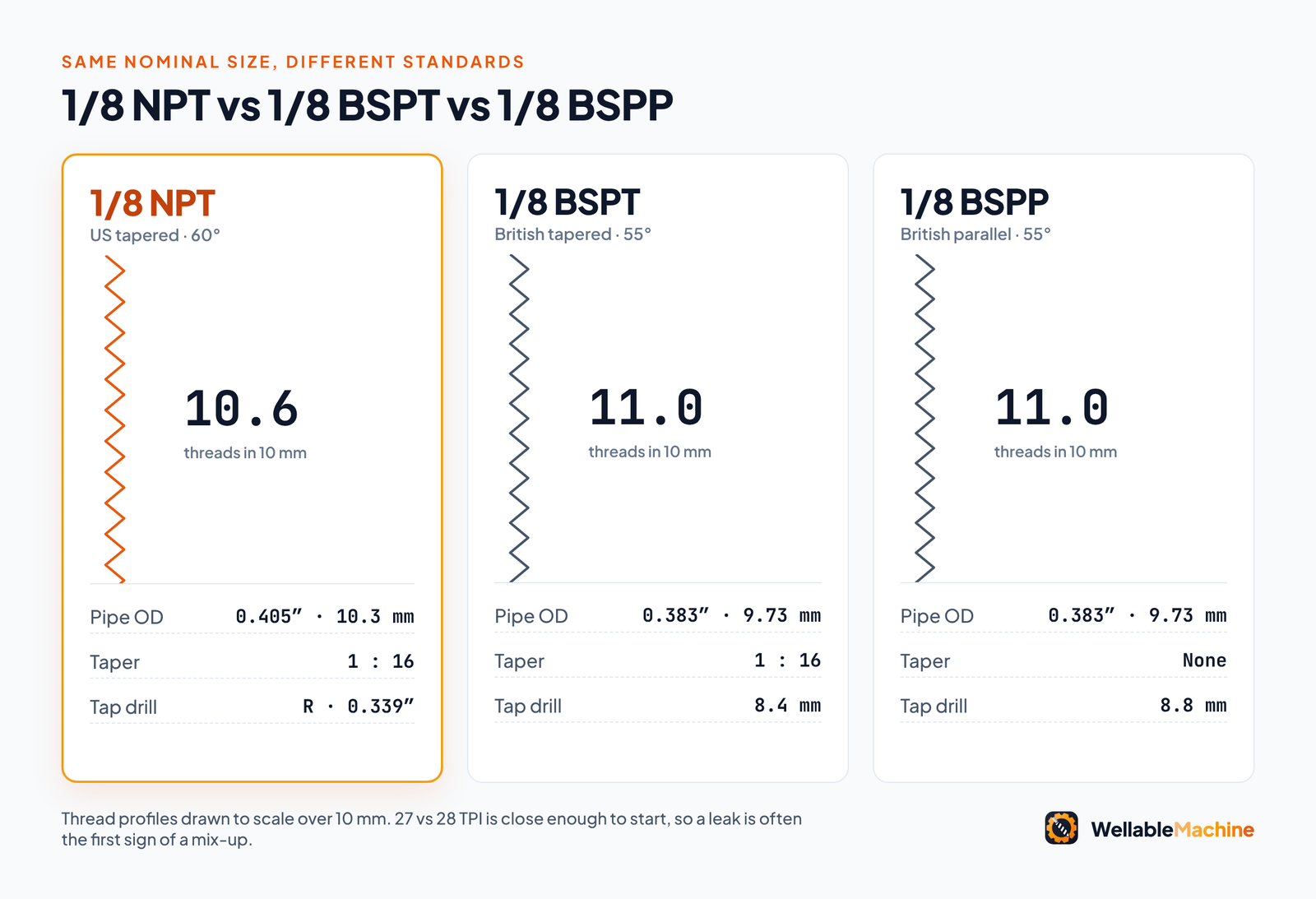
Because 27 and 28 TPI are so close, an NPT fitting will thread a couple of turns into a BSPT port before it binds. It may even feel tight and then leak under pressure. If a fitting came from Europe, Asia or Australia, check it with a thread gauge before you use sealant and a wrench.
NPT vs. NPTF (Dryseal)
NPTF is the “dryseal” version of NPT. It uses the same 27 TPI and the same R tap drill, but the crests and roots are controlled more tightly so the threads seal by metal-to-metal contact without tape. NPTF fittings are common in fuel and hydraulic systems. An NPT tap cuts a port that will accept NPTF fittings, but for a true dry seal you need an NPTF tap.
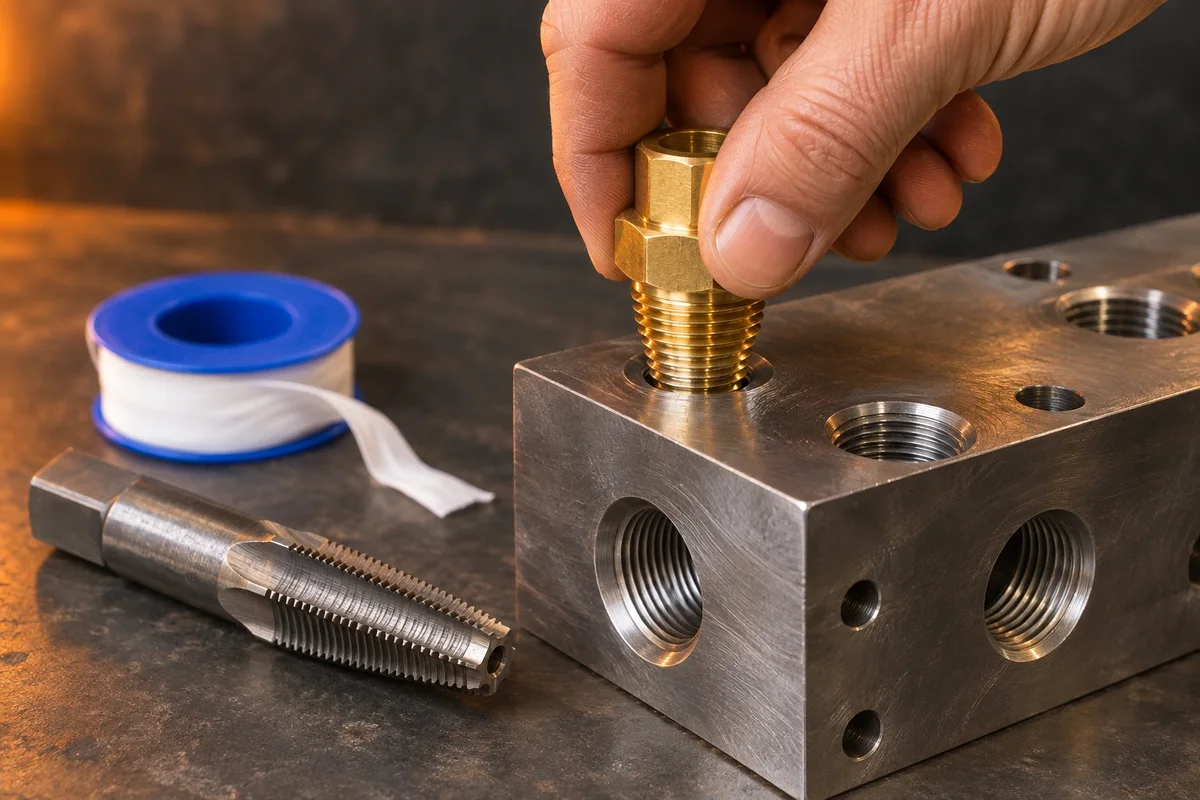
How to Drill and Tap a 1/8 NPT Hole
- Center punch and spot drill the location.
- Drill with an R or 11/32 bit (or 21/64 if you will ream). In aluminum, about 1,500 RPM; in mild steel, 800–1,000 RPM; in stainless, 400–600 RPM with cutting oil.
- Ream (optional): run a 1/8 NPT taper reamer in slowly until it reaches the depth that matches the tap’s gauge mark.
- Start the tap square. Pipe taps are large and very hard to correct once they lean. A drill press or tap guide makes a big difference.
- Tap to depth, not to the bottom. Stop when the fitting will go hand-tight about 4–5 threads, then 2–3 more turns with a wrench. Tapping too deep makes the fitting bottom out before it seals.
- Test fit and clean the port. Blow out all chips before assembly, especially in hydraulic and air systems.
Drilling a large port in stainless? Our how to drill stainless steel guide and the list of best drill bits for stainless steel will help you avoid work hardening.
How Deep Should You Tap a 1/8 NPT Port?
Unlike straight threads, NPT depth is checked with the fitting, not with a depth gauge. A simple method:
- Tap until about 3/4 of the tap’s threads are below the surface.
- Thread in a fitting by hand. It should stop after 4–5 turns.
- If it goes deeper, you have over-tapped. You can still use it with extra sealant, but the joint may crack a thin part when tightened.
- If it stops after 2 turns, take the tap in another quarter to half turn and test again.
Drill the hole at least 0.4 in deep for a blind 1/8 NPT port so the tap has room for its chamfer and the chips.
Sealing a 1/8 NPT Thread
- PTFE tape: 2–3 wraps in the direction of the thread, starting one thread back from the end so tape doesn’t get into the system.
- Pipe dope (thread sealant paste): better for vibration and for hydraulics. Use one rated for the fluid and pressure.
- Anaerobic sealant: cures without air; great for metal fittings that must not loosen.
- Never over-tighten brass or aluminum parts. A tapered thread acts like a wedge and can split a thin housing.
Common 1/8 NPT Problems (and Fixes)
- Fitting leaks even when tight: often a BSPT fitting in an NPT port, or a cracked port from over-tightening. Check the thread type first.
- Fitting goes in too far: the port was tapped too deep. Use a thicker sealant or re-drill and install a bushing.
- Tap is extremely tight: the hole is too small (21/64 without reaming) or you need more cutting oil.
- Threads torn in aluminum: slow down, use a sharp tap and back out more often to clear chips.
Where You’ll Find 1/8 NPT Threads
1/8 NPT is the most common small pipe thread in North America. You will find it on:
- Air compressor fittings such as quick couplers, gauges and blow guns.
- Pressure and temperature sensors on engines, including oil pressure senders and coolant temperature senders.
- Grease fittings and lubrication lines on machinery.
- Small hydraulic and pneumatic manifolds, valves and regulators.
- Gas grills and propane fittings (always use parts and sealants rated for gas).
Because it shows up on so many sensors and gauges, a 1/8 NPT tap and an R drill are worth keeping in any mechanic’s toolbox.
Frequently Asked Questions
7 quick answers from our editors
01What size drill bit for a 1/8 NPT tap?
An R drill (0.339 in) without a reamer, or 21/64 in if you ream with a taper reamer first. 11/32 in is a common substitute.
02What is the metric drill size for 1/8 NPT?
8.6 mm. It is almost the same as an R drill.
03Is 1/8 NPT really 1/8 inch?
No. 1/8 is the nominal pipe size. The thread’s outside diameter is about 0.405 in (10.3 mm).
04How many threads per inch is 1/8 NPT?
27 threads per inch.
05Can I use 11/32 instead of an R drill for 1/8 NPT?
Yes. 11/32 is only 0.005 in larger, so it is easier to tap and still seals well with tape or sealant.
06Is 1/8 NPT the same as 1/8 BSP?
No. BSP has 28 threads per inch and a 55° angle. The two will start together but will not seal properly.
07What size is a 1/4 NPT tap drill?
7/16 in without a reamer, or 27/64 in with a reamer.
Bottom Line
For a 1/8-27 NPT port, drill with an R bit (0.339 in), or 11/32 in if that’s what you have, and tap until a fitting goes in hand-tight about four to five threads. Drill 21/64 in only if you will ream the hole with a taper reamer first. Check imported fittings for BSPT threads before you seal them, and never tap so deep that the fitting bottoms out. For straight-thread sizes, see our full tap drill size chart.