
How to Drill Stainless Steel (Step by Step)
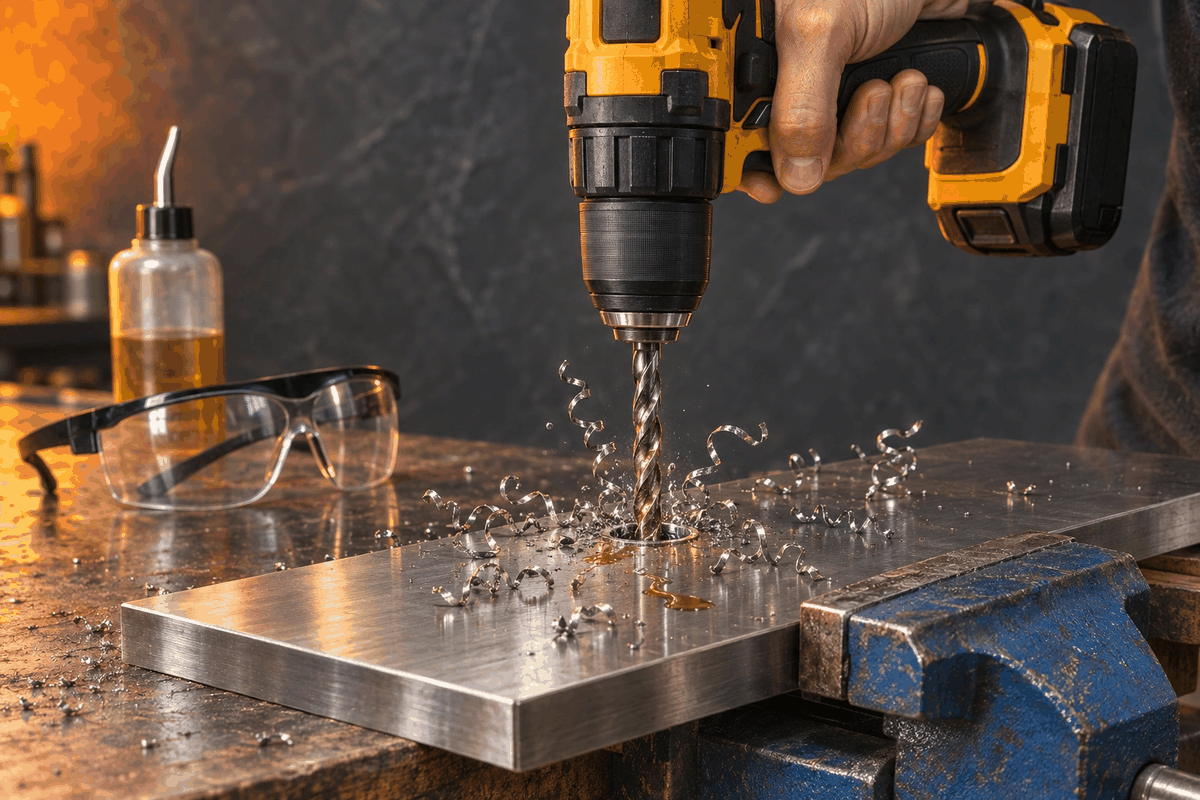
Short answer: to drill stainless steel, use a sharp cobalt drill bit with a 135° split point, run the drill at a low speed (about 300–800 RPM for a 1/4 in hole), apply firm, steady pressure so the bit is always cutting, and keep the hole wet with cutting oil. The biggest mistake is spinning the bit fast with light pressure, which work-hardens the steel and dulls the bit almost instantly.
This guide walks you through the whole process, from choosing the bit to cleaning up the hole, with speed charts and the most common mistakes to avoid.
Why Stainless Steel Is Hard to Drill
Stainless steel (especially 304 and 316 grades) has two properties that make drilling tricky:
- It work-hardens. If the bit rubs instead of cutting, the surface of the steel becomes harder right where you’re trying to drill. Once that happens, even a good bit struggles.
- It holds heat. Stainless conducts heat poorly, so the heat stays at the bit’s cutting edge. Too much heat softens the edge and burns the bit.
Every step below is designed to beat those two problems: keep the bit cutting, and keep it cool.
What You’ll Need
- Cobalt drill bits (M35 or M42) with a 135° split point. See our list of the best drill bits for stainless steel.
- A drill with speed control: a drill press is ideal; a corded or cordless drill in low gear also works.
- Cutting oil or tapping fluid (sulfur-based oils work especially well on stainless).
- Center punch and hammer.
- Clamps or a vise to hold the work.
- Deburring tool or countersink for finishing.
- Safety glasses and gloves: stainless chips are sharp and hot.
How to Drill Stainless Steel: Step by Step
Step 1: Secure the workpiece
Clamp the part firmly to a bench or in a vise. Thin stainless sheet can grab the bit and spin when it breaks through, so never hold it by hand. Put a scrap block of wood underneath to support the sheet and to protect your bench.
Step 2: Mark and center punch
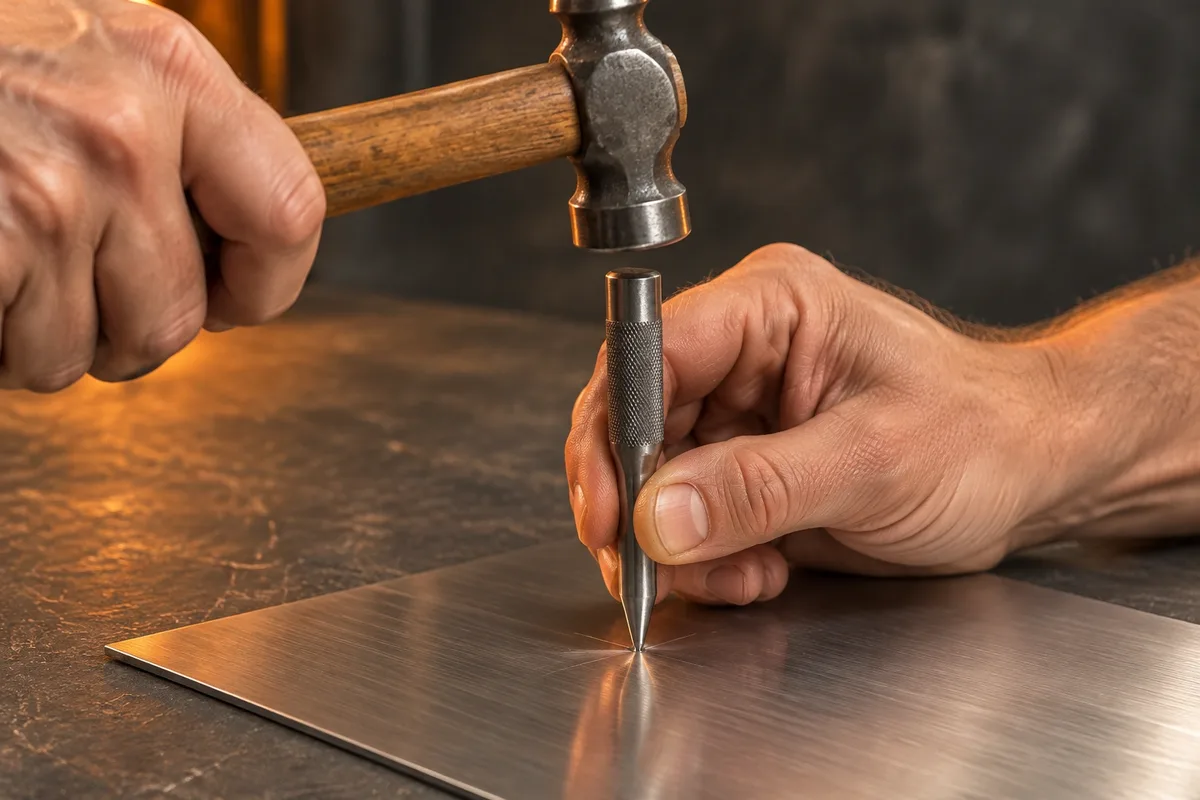
Mark the hole and make a clear dimple with a center punch. Stainless is slippery, and the punch mark gives the bit a place to start without walking across the surface.
Step 3: Drill a pilot hole (for holes over 1/4 in)
For larger holes, drill a pilot hole first with a bit about the size of the larger bit’s web (the solid center), usually 1/8 to 3/16 in. Don’t make the pilot too large, or the bigger bit will chatter. For holes 1/4 in and smaller, a split-point bit can usually go straight in.
Step 4: Set a low speed
Speed is where most people go wrong. Use the chart below as a starting point for 304/316 stainless with cobalt bits:
| Bit size | Approx. speed (RPM) |
|---|---|
| 1/8 in (3 mm) | 1,000–1,400 |
| 3/16 in (5 mm) | 700–950 |
| 1/4 in (6 mm) | 500–700 |
| 3/8 in (10 mm) | 350–450 |
| 1/2 in (13 mm) | 250–350 |
On a cordless drill without an RPM readout, use the low-speed gear (setting 1) and run at about half trigger. If you see blue or straw-colored chips, or smoke, slow down.
Step 5: Apply cutting oil
Put a few drops of cutting oil on the punch mark before you start, and add more every few seconds as you drill. The oil lowers friction and carries heat away from the cutting edge.
Step 6: Drill with firm, constant pressure
Push hard enough that the bit produces a continuous curled chip. If you only get dust or fine powder, the bit is rubbing, so add pressure or slow down. Don’t pause with the bit spinning in the hole; that’s when work-hardening happens.
Step 7: Clear chips and let it cool
On deeper holes, back the bit out every few seconds to clear chips and add oil (this is called “peck drilling”). If the bit gets too hot to touch, let it cool in the air; don’t quench a hot cobalt bit in water, as the shock can crack it.
Step 8: Ease off at breakthrough
As the bit is about to exit the back side, reduce pressure. This stops the bit from grabbing, which can snap small bits or spin thin sheet.
Step 9: Deburr the hole
Finish both sides of the hole with a deburring tool or a countersink bit turned by hand or at low speed. Stainless burrs are razor sharp.
Common Mistakes When Drilling Stainless Steel
- Running the drill too fast. High RPM creates heat that ruins the bit and hardens the steel.
- Using too little pressure. A bit that rubs is a bit that’s work-hardening the hole.
- Drilling dry. Even a few drops of oil make a huge difference.
- Using titanium-coated or black oxide bits. They’ll go dull quickly in stainless. Use cobalt.
- Using a dull bit. Sharpen or replace it as soon as cutting slows down.
- Making the pilot hole too big. It causes chatter and an out-of-round hole.
Drilling Thin Stainless Sheet
For sheet thinner than about 1/16 in (1.5 mm), such as a sink, backsplash or appliance panel, a step drill bit often gives a rounder, cleaner hole than a twist bit. Use the same rules: low speed, oil and steady pressure. Put masking tape on the surface to protect the finish and help the bit start.
Drilling and Tapping Stainless Steel
If you need to thread the hole, choose a tap drill that gives about 65–70% thread instead of the usual 75%. It reduces tapping torque a lot and lowers the risk of breaking the tap. For example, for a 1/4-20 thread, a #5 drill or 5.2 mm bit is a good choice in stainless.
Frequently Asked Questions
What is the best drill bit for stainless steel?
Cobalt (M35 or M42) bits with a 135° split point. They keep their hardness at high temperatures and start without walking.
What speed should I drill stainless steel?
Slow. About 500–700 RPM for a 1/4 in bit, and lower for bigger bits. Larger bits always need a slower speed.
Can you drill stainless steel with a regular drill?
Yes. A corded or cordless drill works fine if you use cobalt bits, the low-speed setting, firm pressure and cutting oil.
What can I use instead of cutting oil?
Cutting oil is best, but in a pinch, motor oil or a thick general-purpose lubricant is better than drilling dry. Avoid water-based sprays for long holes, as they evaporate quickly.
Why is my drill bit not going through stainless steel?
Either the bit is dull, the speed is too high, or the stainless has work-hardened from rubbing. Sharpen or replace the bit, slow down, add oil and push harder. If the surface has hardened, a fresh, sharp cobalt bit is usually needed to cut through it.
Do I need a pilot hole for stainless steel?
For holes over 1/4 in, yes. A small pilot hole (about the size of the large bit’s web) makes the job easier and more accurate. For small holes, a split-point bit doesn’t need one.
Bottom Line
Drilling stainless steel comes down to four things: a sharp cobalt bit, a low speed, firm and steady pressure, and cutting oil on every hole. Keep the bit cutting so the steel never work-hardens, clear chips on deep holes and ease off as you break through. If you’ll tap the hole afterward, pick a slightly larger tap drill from our tap drill size chart to protect the tap, and see our picks for the best drill bits for stainless steel.